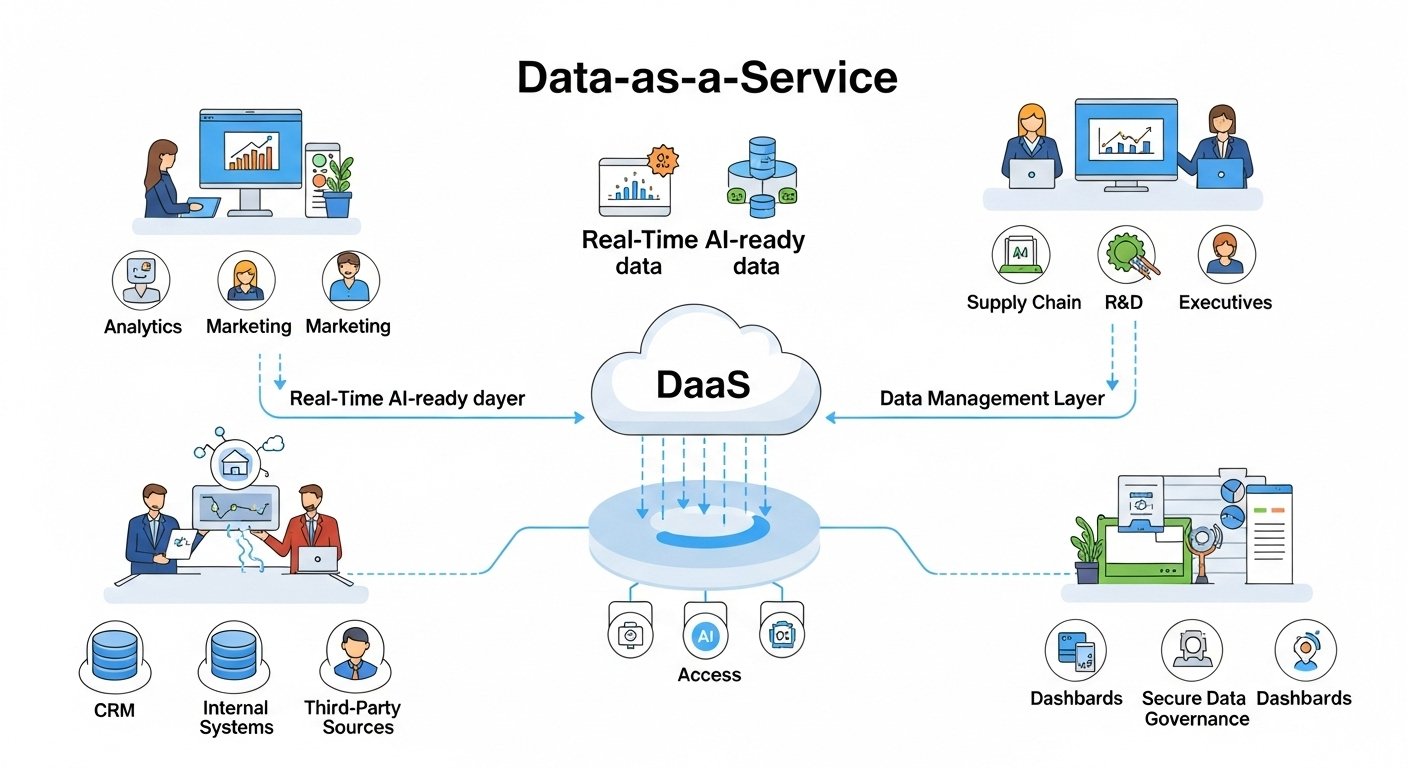
In today’s digital and artificial intelligence era, data as an input plays the role of a heartbeat for every organization. Companies and industries generate massive amounts of information daily, but much of it remains trapped in silos or outdated systems, limiting its usefulness (Forbes, 2023).
This is where Data-as-a-Service (DaaS) comes into play. DaaS’s cloud-based strategic system makes it simple for businesses to access critical data from anywhere at any time (Gartner, 2022). DaaS helps businesses and industries make better decisions, react to market changes more quickly, and spur growth in all departments by providing clean, real-time, and AI-ready datasets (TechTarget, 2023).
What Makes DaaS Different?
Unlike traditional data management, meaning old database systems, DaaS (Data as a Service) removes the basic need, meaning heavy maintenance, and then makes complex and difficult infrastructure easily accessible.
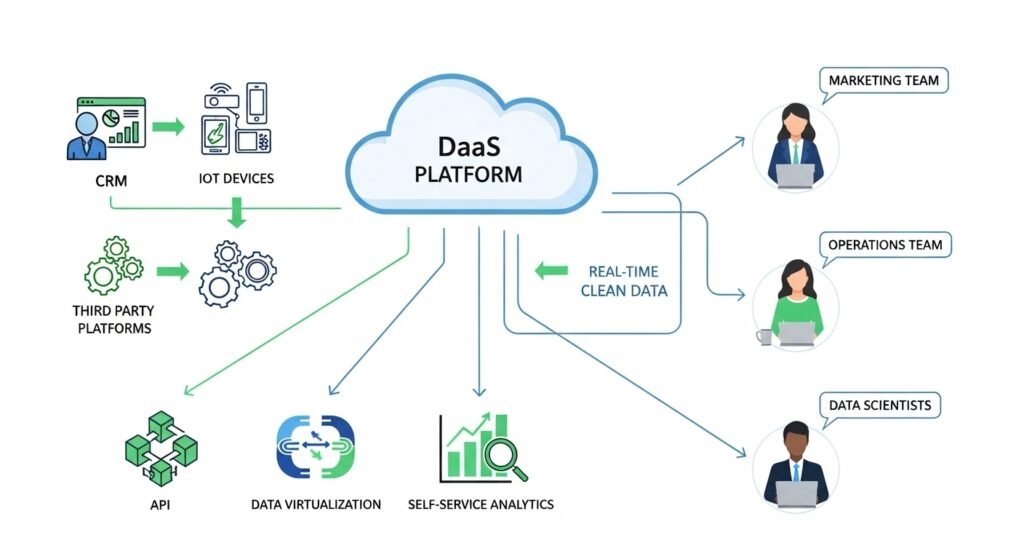
With APIs, data virtualization, and self-service analytics, teams can easily get, meaning it is easily accessible, exactly what they need, meaning according to their requirement, when they need it.
Basically, DaaS transforms raw data, meaning input data, into a shared service, allowing teams to focus on insights and observations instead of managing spreadsheets or legacy systems.
The Benefits of Data-as-a-Service
Implementing DaaS (Data as a Service) provides actual benefits that are not limited to efficiency only. Organisations, industries, and companies can leverage DaaS to manipulate their input data and monetize it, converting untapped information into actionable insights to improve marketing, sales, and customer engagement.
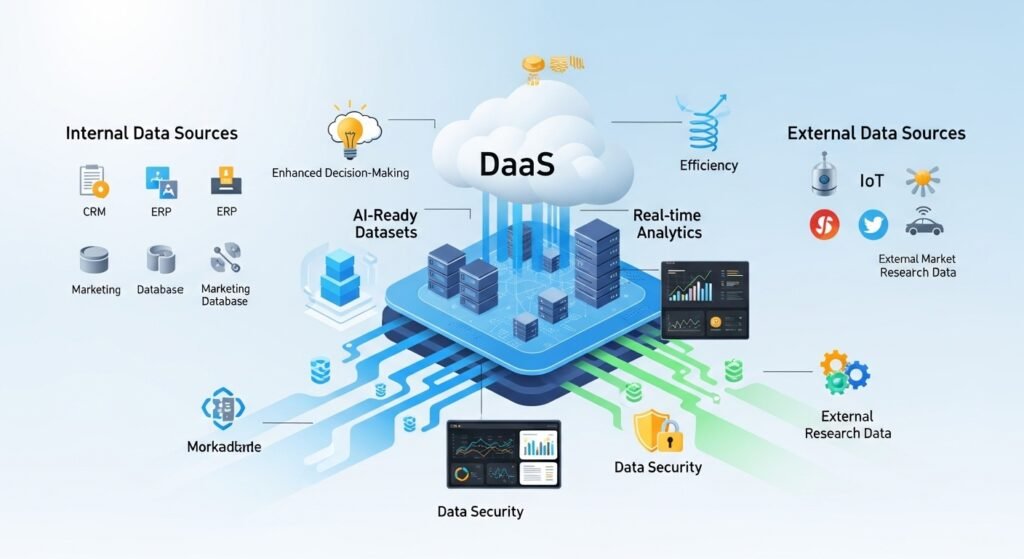
Cloud-based approaches like DaaS give businesses on-demand access to vital data anytime, from any location. Clean, real-time, and AI-ready datasets are delivered, allowing DaaS companies to make better decisions, react to market changes more quickly, and spur growth in all departments.
DaaS also fosters agility. By merging external processed data sources with internal linked data sources, businesses gain a comprehensive view of customers, partners, and market trends. Leaders and employees can preserve a competitive edge, improve processes, and respond swiftly to shifts in demand.
Furthermore, DaaS promotes informed decision-making by encouraging a data-driven culture, breaking down organisational silos, and providing employees with access to information across the business. Security and risk management remain key advantages.
How DaaS Works
DaaS (Data as a Service) generally works on two layers: the Data Access layer, which is responsible for accessing data, and the Data Management layer, which manages and processes data. The Access layer provides real-time retrieval of information, offering organizations insights such as company details, contacts, location data, and market trends.
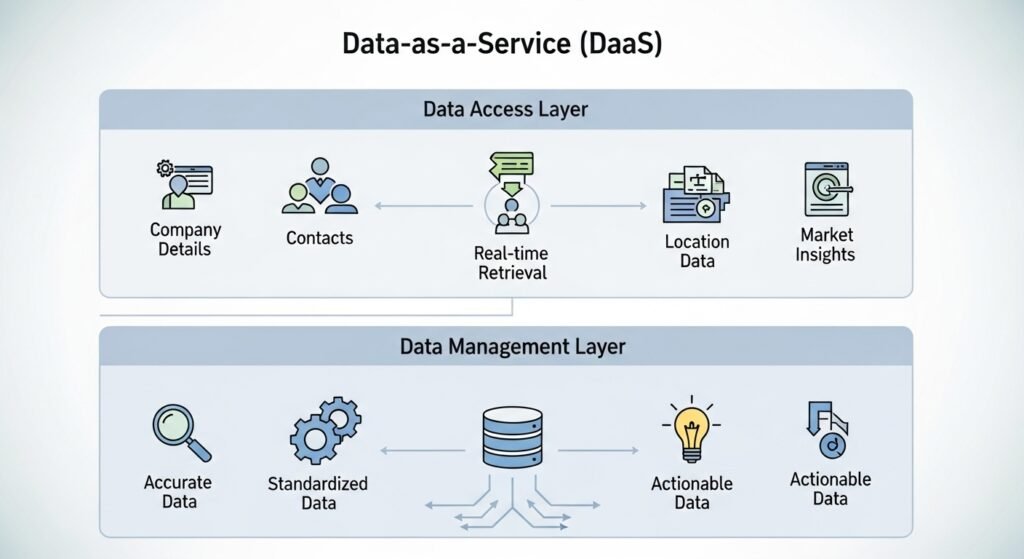
The Management layer ensures that data is accurate, standardized, and ready for use. With this setup, companies can access high-quality, actionable insights in real time without delays or manual intervention.
Applications Across Industries
DaaS is very versatile and supports various business functions and companies procedures. Marketing team and sales teams can utilise it to improve targeting process, lead generation, and campaign customisation. Logistics and inventory data are available in real time to supply chain managers. R&D teams use DaaS to speed up innovation, and executives utilise it for strategic planning. DaaS has being effectively used by sectors including healthcare, retail, finance, logistics, and telecom to boost operational effectiveness, cut expenses, and spot expansion prospects.
Conclusion
Information as a Service is now a need for companies that wish to remain competitive, not just a choice. Businesses can make better decisions, expand more quickly, and improve customer experiences by using the accurate, real-time data that DaaS provides. DaaS turns difficult data into a competitive advantage by cutting expenses, dismantling data silos, and facilitating sophisticated go-to-market tactics. Businesses may get an edge in today’s data-centric business environment by utilising DaaS to increase operational effectiveness, uncover hidden revenue, and establish a really data-driven culture.