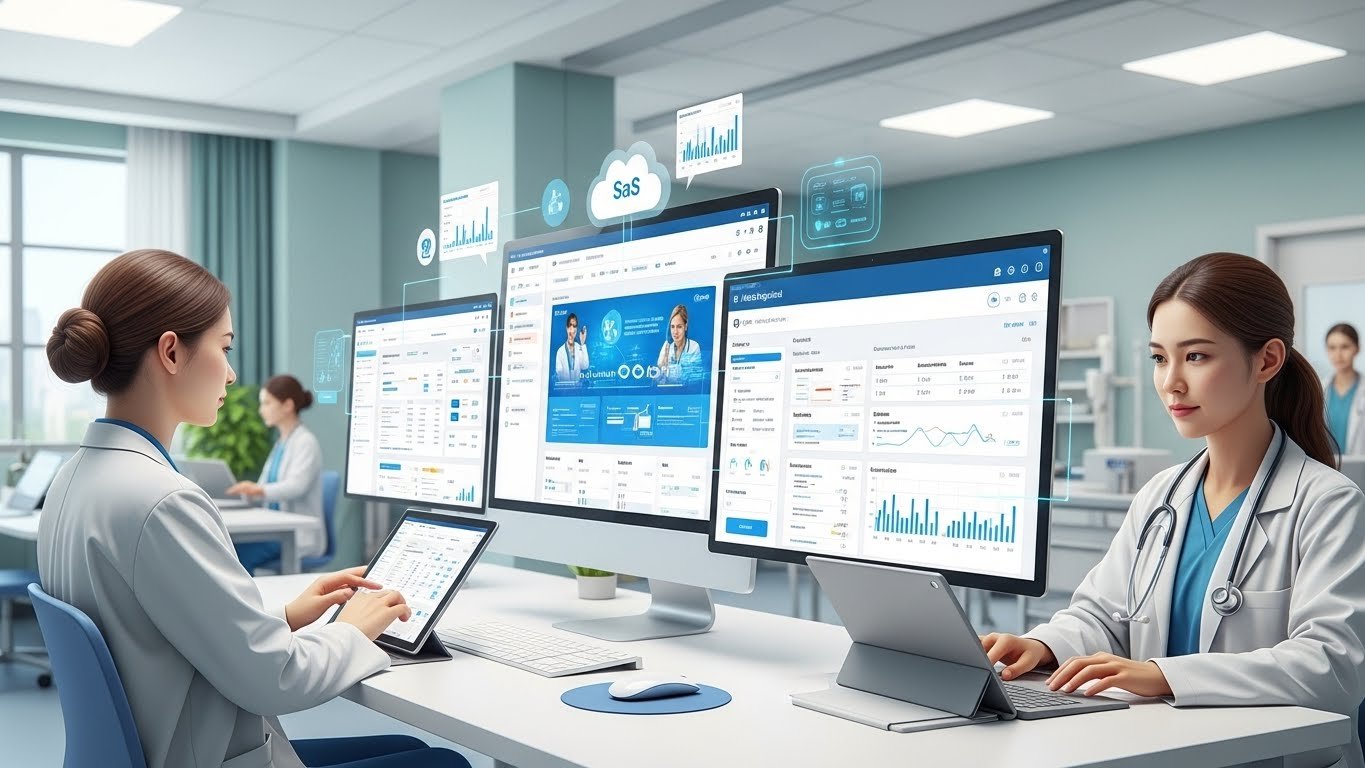
The healthcare industry is undergoing a massive digital transformation as hospitals and medical institutions strive to deliver better patient care while managing increasing operational complexity. Traditional manual processes, paper-based records, and disconnected software systems are no longer sufficient to meet modern healthcare demands. As a result, Hospital Management Systems have become a critical component of digital healthcare infrastructure.
With the rise of cloud technology, Hospital Management Systems SaaS solutions are enabling hospitals to streamline operations, reduce costs, and improve efficiency. These systems integrate clinical, administrative, and financial processes into a single platform, allowing healthcare providers to focus more on patient care rather than operational challenges. This article provides a comprehensive overview of Hospital Management Systems, their role in healthcare SaaS, and how they are transforming hospitals worldwide.
What is a Hospital Management System?
A Hospital Management System (HMS) is a software solution designed to manage the day-to-day operations of a hospital or healthcare facility. It automates and integrates various departments such as outpatient services, inpatient management, laboratories, pharmacies, billing, and staff administration.
In a SaaS model, the system is hosted on the cloud and accessed through the internet. This eliminates the need for expensive on-premise infrastructure and allows hospitals to scale their operations easily. Modern Hospital Management Systems provide real-time data access, centralized control, and seamless communication between departments.
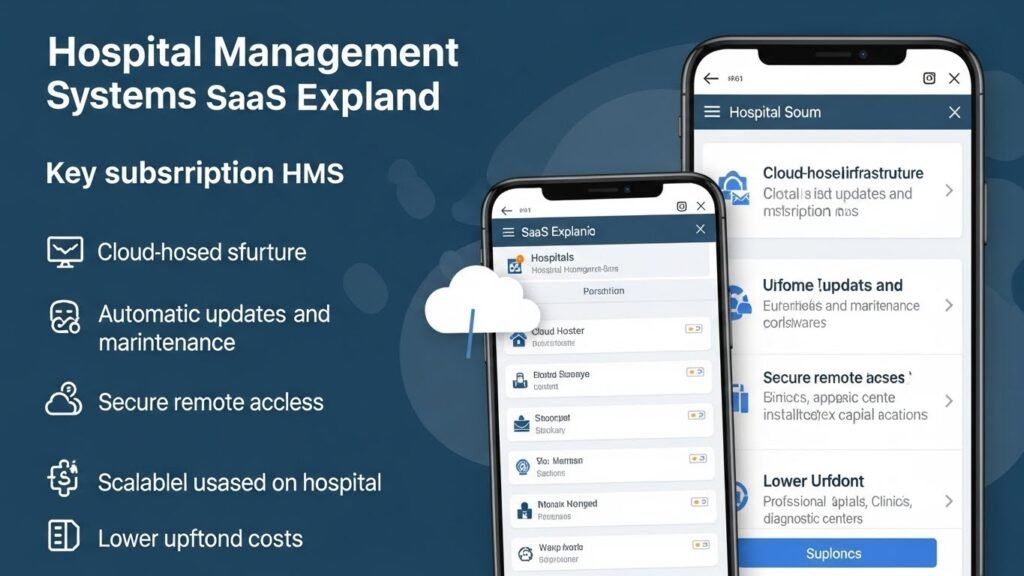
Hospital Management Systems SaaS Explained
Hospital Management Systems SaaS refers to cloud-based HMS platforms that operate on a subscription model. Hospitals can access the software through web browsers or mobile applications without installing complex hardware or servers.
Key Characteristics of SaaS-based HMS:
- Cloud-hosted infrastructure
- Automatic updates and maintenance
- Secure remote access
- Scalable usage based on hospital size
- Lower upfront costs
This model is particularly beneficial for small and mid-sized hospitals, clinics, and diagnostic centers that require professional healthcare software without heavy capital investment.
Importance of SaaS in the Healthcare Industry
The healthcare industry handles sensitive data, complex workflows, and time-critical operations. SaaS solutions play a vital role in addressing these challenges.
1. Cost Efficiency
SaaS eliminates the need for expensive servers, IT staff, and maintenance. Hospitals pay only for what they use.
2. Accessibility
Doctors, nurses, and administrators can access hospital systems from anywhere, improving collaboration and response time.
3. Data Security
Leading healthcare SaaS providers implement encryption, backups, and compliance standards to protect patient data.
4. Scalability
As patient volume grows, hospitals can easily upgrade their system without rebuilding infrastructure.
Core Modules of Hospital Management Systems
A modern Hospital Management System consists of multiple integrated modules, each handling a specific hospital function.
Hospital Management Systems (HMS) – Core Operations
Key Features:
- Patient registration and records
- OPD and IPD management
- Bed and ward allocation
- Doctor scheduling
- Pharmacy and laboratory integration
- Billing and payments
- Reports and analytics
Benefits:
- Centralized hospital operations
- Reduced paperwork
- Faster patient processing
- Improved coordination between departments
HMS serves as the backbone of digital hospitals and connects all healthcare processes into a unified system.
Electronic Health Records (EHR)
What is EHR?
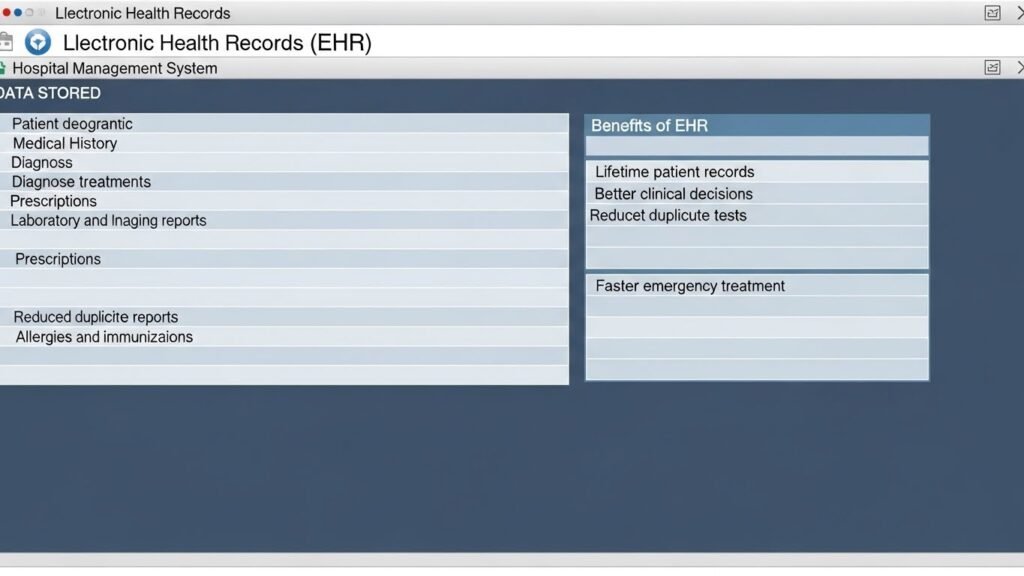
Electronic Health Records (EHR) are digital versions of a patient’s medical history maintained within the Hospital Management System. EHRs store comprehensive patient information over time.
Data Stored in EHR:
- Patient demographics
- Medical history
- Diagnoses and treatments
- Prescriptions
- Laboratory and imaging reports
- Allergies and immunizations
Benefits of EHR:
- Lifetime patient records
- Better clinical decisions
- Reduced duplicate tests
- Faster emergency treatment
EHRs improve continuity of care and allow healthcare providers to access accurate patient data instantly.
Telemedicine Platforms
What is Telemedicine?
Telemedicine platforms allow doctors and patients to consult remotely using digital communication tools. These platforms are often integrated with Hospital Management Systems.
Key Features:
- Video and audio consultations
- Secure chat messaging
- Digital prescriptions
- Report sharing
- Online payments
Benefits:
- Increased access to healthcare
- Reduced travel and waiting time
- Ideal for rural and remote areas
- Continuity of care during emergencies
Telemedicine has become an essential part of modern healthcare, especially after global health crises highlighted the need for remote care.
Medical Billing Software
What is Medical Billing Software?
Medical billing software automates the financial processes of hospitals, ensuring accurate invoicing and payment management.
Billing Functions:
- OPD and IPD billing
- Insurance claim management
- Pharmacy and lab billing
- Payment gateway integration
- Financial reporting
Benefits:
- Reduced billing errors
- Faster claim processing
- Improved revenue cycle management
- Transparent financial records
Billing automation ensures hospitals maintain financial stability while delivering quality healthcare services.
Appointment Scheduling Software
Purpose of Appointment Scheduling
Appointment scheduling software allows patients to book doctor appointments online while helping hospitals manage time efficiently.
Features:
- Online booking
- Doctor availability display
- SMS and email reminders
- Appointment rescheduling
- Queue management
Benefits:
- Reduced waiting times
- Better doctor productivity
- Improved patient satisfaction
- Fewer no-shows
This module improves operational efficiency and enhances the patient experience.
Health Analytics Software
What is Health Analytics?
Health analytics involves analyzing healthcare data to gain insights into hospital performance, patient outcomes, and disease trends.
Types of Healthcare Analytics:
- Descriptive analytics (past performance)
- Predictive analytics (future trends)
- Prescriptive analytics (recommended actions)
Benefits:
- Data-driven decision making
- Early disease detection
- Resource optimization
- Improved quality of care
Health analytics empowers hospitals to move from reactive care to proactive healthcare management.
Benefits of Hospital Management Systems for Healthcare Providers
Implementing Hospital Management Systems delivers significant advantages:
- Improved operational efficiency
- Better patient care coordination
- Reduced administrative workload
- Accurate data management
- Faster clinical decisions
- Enhanced compliance and reporting
Hospitals that adopt digital systems gain a competitive edge in delivering modern healthcare services.
Challenges and Risks in Healthcare SaaS
Despite its benefits, healthcare SaaS also faces challenges:
Data Security & Privacy
Hospitals must ensure patient data protection and regulatory compliance.
Regulatory Requirements
Healthcare systems must comply with laws such as HIPAA and GDPR.
Infrastructure Limitations
Reliable internet connectivity is essential for cloud-based systems.
Staff Training
Successful implementation requires training medical and administrative staff.
Addressing these challenges is critical for long-term success.
Hospital Management Systems in Pakistan and Emerging Markets
In emerging markets like Pakistan, digital healthcare adoption is increasing rapidly. Private hospitals and clinics are actively implementing Hospital Management Systems to improve service quality.
Opportunities:
- Growing private healthcare sector
- Increasing smartphone and internet usage
- Demand for affordable SaaS solutions
Challenges:
- Limited digital literacy
- Budget constraints
- Infrastructure gaps
Despite these challenges, healthcare SaaS has immense growth potential in developing regions.
Future of Hospital Management Systems
The future of Hospital Management Systems is closely tied to advanced technologies.
AI & Machine Learning
AI-driven diagnostics, chatbots, and predictive analytics will enhance hospital efficiency.
IoT & Wearable Devices
Real-time patient monitoring through smart devices will improve care delivery.
Blockchain
Secure and transparent medical records management.
Personalized Healthcare
Data-driven personalization will transform patient treatment plans.
How to Choose the Right Hospital Management System
When selecting an HMS, hospitals should consider:
- Functional requirements
- Security and compliance
- Scalability
- Integration capabilities
- User experience
- Customer support
Choosing the right system ensures long-term operational success.
Frequently Asked Questions (FAQs)
What is a Hospital Management System?
A digital platform that manages hospital operations and patient data.
Is Hospital Management Systems SaaS secure?
Yes, when implemented with proper security standards and compliance.
Can small clinics use HMS?
Absolutely, SaaS-based systems are ideal for small healthcare facilities.
What is the difference between HMS and EHR?
HMS manages hospital operations, while EHR focuses on patient medical records.
Conclusion
Hospital Management Systems have become the foundation of modern digital healthcare. By integrating clinical, administrative, and financial operations into a single SaaS platform, hospitals can improve efficiency, reduce costs, and deliver better patient care. As healthcare continues to evolve, cloud-based Hospital Management Systems will play a crucial role in shaping the future of hospitals and healthcare services worldwide.