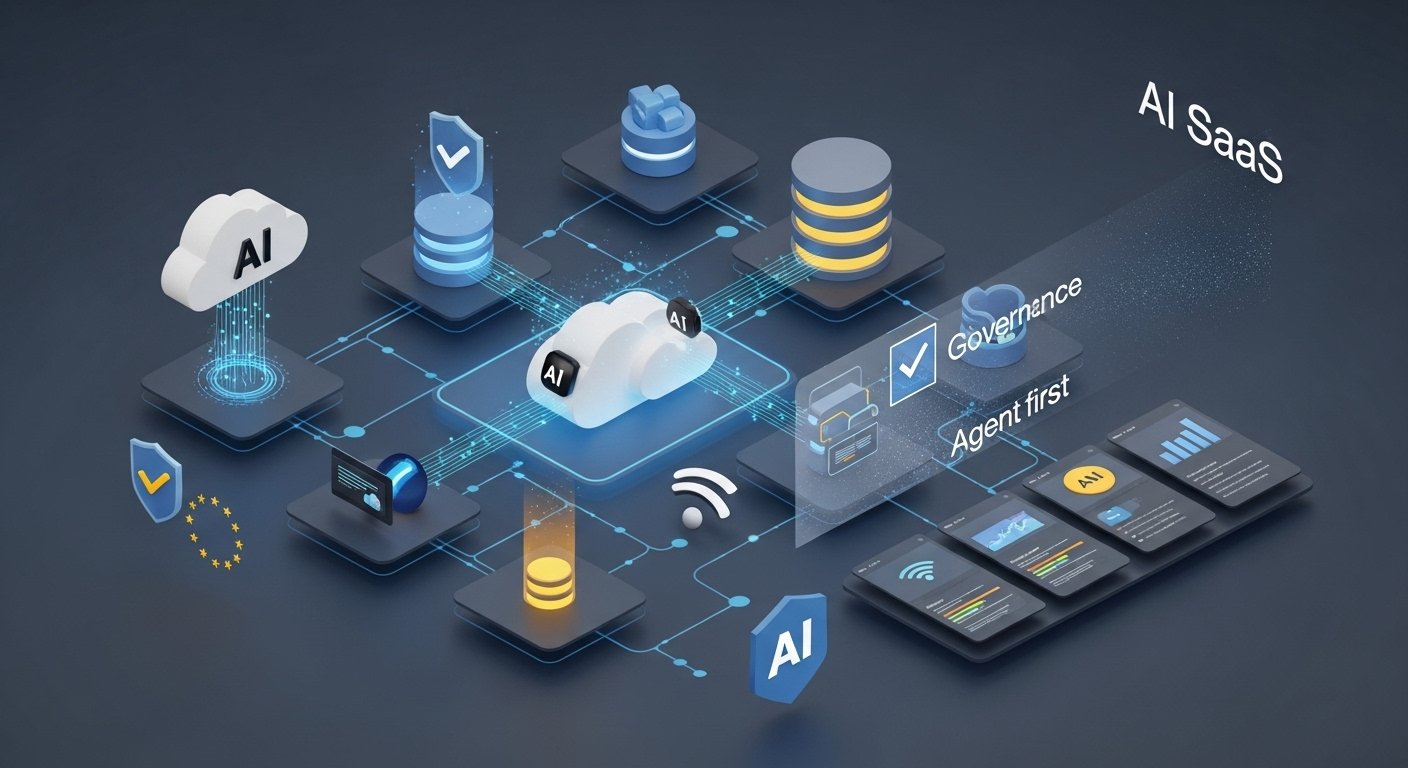
The global software-as-a-service ecosystem has undergone a fundamental metamorphosis, transitioning from a collection of fragmented tools into a tightly woven, intelligence-first fabric. By the inception of 2026, the marketplace has moved beyond the “era of experimentation” into an “era of accountability,” where the success of a platform is no longer judged by the novelty of its artificial intelligence features but by its operational resilience, economic alignment, and verifiable business outcomes. The market, once driven by wide-eyed curiosity, is now governed by focused expertise, regulatory transparency, and a rigorous demand for return on investment. As the global SaaS market expands from $266 billion in 2024 to an estimated $315 billion in 2026, the criteria for classifying these products have become the most critical instrument for procurement teams, venture capitalists, and architects alike. Within this context, the ai saas product classification criteria have evolved into a multi-dimensional matrix that prioritizes autonomy, governance, and architectural depth over simple functional utility.
The fundamental disruption occurring in 2026 is the collapse of the traditional “seat-based” value proposition. For decades, software value was correlated with the number of human users interacting with a screen. Today, as software begins to perform work rather than merely supporting it, the unit of value has shifted to the task completed and the quality of the autonomous outcome. This transition necessitates a sophisticated taxonomy that can distinguish between “traditional” applications with intelligence bolt-ons and “native-AI” systems designed from day zero around foundation models and inference pipelines. For professional peers navigating this landscape, the challenge lies in identifying platforms that offer not just innovation, but “easy read ability” in their governance structures and output clarity, ensuring that as agents take over routine interactions, the human oversight remain meaningful and informed.
Architectural Integrity as a Primary Classification Vector
The first and most critical dimension in the 2026 classification matrix is the underlying architectural philosophy of the product. Industry analysts now strictly differentiate between AI-Enhanced (Legacy) SaaS and AI-Native SaaS. Legacy platforms are defined by their “bolted-on” approach, where intelligence features are added as secondary suggestors or sidebar assistants. These systems often struggle with the “thundering herd” problem, where agentic fan-out—a single goal triggering thousands of recursive sub-tasks—overwhelms backends designed for the predictable, 1:1 ratio of human clicks to system responses. In contrast, AI-native SaaS is architected around inference pipelines and continuous context loops from the start. These platforms prioritize an “agent-first” design, where the interface is often invisible, and workflows are expressed as sets of constraints and objectives rather than a series of menus.
The architectural divide also manifests in how these systems handle data. Traditional systems often rely on standard relational databases that lack the semantic depth required for high-fidelity reasoning. AI-native architectures, however, integrate vector databases and semantic layers directly into the core stack, allowing for real-time data grounding and the elimination of hallucinations through RAG 2.0 (Retrieval-Augmented Generation). This architectural maturity is a prerequisite for what is now termed the “Single Pane of AI,” where a centralized intelligence layer replaces the fragmented dashboards of the past, providing a unified interface for interacting with dozens of specialized tools through the Model Context Protocol.
Comparison of Architectural Taxonomy and System Requirements
The following table provides a comprehensive overview of how software is classified based on its structural readiness for the agentic era, focusing on the technical capabilities that separate leaders from laggards in 2026.
| Architectural Class | Core Philosophy | Data Integration Strategy | Scaling Mechanism | Primary User Interface |
| Legacy SaaS | Human-centric, manual input | Standard APIs; silod data | Vertical scaling per user | Dashboards and menus |
| AI-Enhanced SaaS | Feature-bolt-on; assistive | RAG wrappers over SQL | Hybrid scaling; high latency | Sidebars and chatbots |
| AI-Native SaaS | Agent-centric; autonomous | Native vector stores; MCP | Recursive fan-out; LPU/ASIC | Goal-based; “Invisible” |
| Agent-Native Infra | Machine-to-machine logic | Continuous context loops | 1M+ transactions/sec | API-driven orchestration |
The move toward agent-native infrastructure is not merely a technical preference but a survival requirement. As transaction volumes increase by two orders of magnitude—from 10,000 transactions per second in the mobile era to over 1,000,000 in the agentic era—legacy systems face existential risks of system instability and performance bottlenecks. Vendors that fail to rebuild their foundations for parallel processing and specialized data stores will find themselves unable to compete on the basis of “cost per successful outcome,” which has replaced “cost per license” as the dominant economic metric.
The Model Context Protocol and the Standardization of Interoperability
As the AI ecosystem expands, the industry has faced a “M x N” integration problem, where connecting multiple intelligence models to diverse enterprise systems required an unsustainable number of bespoke connectors. In 2026, the Model Context Protocol (MCP) has emerged as the canonical bridge, effectively serving as the “universal adapter” for the intelligence age. MCP cleanly separates data access, tooling, and agent autonomy, allowing any AI that speaks the protocol to interact with any service that supports it. This standardization has moved from early adoption to a mandatory infrastructure component for any platform seeking enterprise-wide deployment.
The implementation of MCP has practical, everyday impacts on how software is evaluated. It enables “easy read ability” for agents navigating complex organizational data, as the protocol defines a single, secure method for communication between the AI and the database, CRM, or analytics platform. Successful SaaS launches in 2026 now advertise “MCP-native” as a core product capability, shipping out-of-the-box endpoints that allow external agents to collaborate with the platform’s internal logic. This shift allows for the creation of “cross-system workflow reasoning,” where agents can autonomously call integrations, handle errors, and enforce guardrails across a company’s entire stack.
Strategic Advantage of MCP Adoption across Corporate Functions
The adoption of MCP provides distinct benefits across the organization, influencing how different stakeholders classify the value of a SaaS investment.
| Role in Organization | Key Benefit of MCP-Native SaaS | Impact on Workflow |
| IT & Engineering | Architecture simplification | Eliminates custom API maintenance |
| Security & Compliance | Least-privilege enforcement | Unified point of governance |
| Business Teams | Faster deployment of agents | Rapid realization of automation ROI |
| Executive Leadership | Reduced vendor lock-in | Lower Total Cost of Ownership (TCO) |
For the engineering team, the primary advantage is the reduction of technical debt. Instead of maintaining a tangled web of connectors, they can adopt one unified standard that scales as the enterprise tools evolve. For the security team, MCP provides a structured approach to permission scoping and “explicit context declarations,” where the AI must state its intent and context before accessing sensitive resources. This level of transparency is essential for building trust in autonomous systems that handle high-stakes business processes.
Regulatory Tiers and the Risk-Based Classification Framework
The 2026 regulatory landscape is dominated by the full applicability of the European Union’s AI Act, which has established a risk-based classification system that directly impacts market access and operational cost. An AI SaaS product’s classification is no longer just a marketing choice; it is a legal designation that determines the stringency of the compliance obligations it must meet. This framework categorizes AI systems into four levels—unacceptable, high, limited, and minimal risk—each triggering a different set of mandates for the provider and the deployer.
High-risk AI systems, such as those used in critical infrastructure, education, employment, and financial credit scoring, are subject to extensive requirements including mandatory conformity assessments, human oversight, and registration in an EU-wide database. In this environment, the “easy read ability” of compliance documentation is a competitive advantage. Vendors that provide clear, automated audit trails and transparent decision logs find it significantly easier to pass the procurement hurdles of large, risk-averse enterprises.
EU AI Act Risk Classification and Operational Impact
The following table summarizes the risk-based categories that every AI SaaS product must navigate to maintain presence in the global market.
| Risk Category | Examples of AI Systems | Legal Status | Primary Requirement |
| Unacceptable | Social scoring, deceptive toys | Prohibited | Immediate removal/ban |
| High Risk | Recruitment, medical devices | Permitted | Conformity assessment & GRC |
| Limited Risk | General purpose chatbots | Permitted | Transparency/Informed consent |
| Minimal Risk | Spam filters, video games | Permitted | Voluntary ethical codes |
A major challenge in 2026 is the classification of General Purpose AI (GPAI) models, which can be integrated into a wide variety of downstream applications. These models face additional transparency rules, such as revealing that content was produced by AI and ensuring that model training did not violate illegal content or copyright standards. Furthermore, as AI begins to automate legal and financial decisions, “death by AI” claims—legal challenges arising from insufficient risk guardrails—are expected to exceed 2,000 cases annually, making autonomous governance modules a “must-have” feature for any enterprise ERP or HCM platform.
Economic Alignment: Usage-Based and Outcome-Based Monetization
The transition of the ai saas product classification criteria has fundamentally altered the economics of software. In 2026, the traditional per-seat license is under intense pressure as AI enables customers to achieve greater results with fewer employees, leading to a natural reduction in license counts. To remain viable, SaaS vendors are shifting toward usage-aligned and outcome-oriented pricing models. This shift is not just a tactical change but a business model reset that aligns the cost of the software with the value it delivers.
This economic realignment is driven by the reality of inference costs. Unlike traditional software, where the marginal cost of a new user is near zero, an AI SaaS product incurs a direct expense every time it generates a result. For instance, serving a high-end language model like GPT-4 can cost several cents per prompt, meaning that as usage scales, the provider’s expenses scale proportionally. This has led to the emergence of gross margins in the 50-60% range for AI-first companies, significantly lower than the 80-90% margins common in legacy SaaS.
SaaS Economic Benchmarks and Performance Indicators for 2026
The market in 2026 rewards clear evidence that AI creates new revenue streams and increases customer willingness to pay through measurable efficiency gains.
| Financial Metric | 2026 Median Benchmark | Top Quartile Benchmark | Importance in 2026 |
| Net Revenue Retention (NRR) | 106% | 120% – 130%+ | Measures expansion value |
| Gross Margin | 77% (SaaS avg) | 90% (Legacy) | Reflects AI inference burden |
| Rule of 40 Score | 25% | 60%+ | Balances growth vs profit |
| Magic Number | 0.75 | 1.0 – 1.5+ | Measures sales efficiency |
| LTV / CAC Ratio | 4:1 | 5:1+ | Validates unit economics |
In 2026, the “Magic Number” and “Burn Multiple” have become primary indicators of health. Investors now look for a Magic Number above 1.0, signifying that for every dollar spent on sales and marketing, the company is generating at least a dollar of new recurring revenue. Furthermore, companies with NRR (Net Revenue Retention) above 100% are growing 1.5 to 3 times faster than their peers, as they are able to expand within their existing customer base without the high cost of acquiring “new logos”. This trend has made customer success platforms that use AI to predict churn and surface expansion opportunities a critical component of the modern SaaS stack.
Verticalization and Industry-Specific Intelligence
The saturation of horizontal markets has led to a dominant trend of deep verticalization. In 2026, the “winners” are those platforms that specialize in regulatory-heavy sectors, blue-collar workflows, or high-trust domains where generic AI tools fall short. These platforms utilize domain-specific language models (DSLMs) which offer higher accuracy, lower costs, and better compliance than their general-purpose counterparts. By 2028, Gartner predicts that over half of the generative AI models used by enterprises will be domain-specific.
In the HealthTech vertical, for example, the criteria for classification revolve around the system’s ability to handle ambient clinical documentation—listening to doctor-patient consultations and automatically generating structured notes within the EHR. In FinTech, the focus is on real-time fraud detection and “explainable AI” that allows institutions to understand why a specific financial decision was made. In these sectors, “trust is the product,” and success is measured by clinical metrics or fraud reduction rates rather than just software engagement.
ROI Case Studies and Success Metrics in Vertical AI
The following table highlights the measurable impact that specialized AI platforms are delivering across key industries in 2026.
| Industry Vertical | Focus Area | Measurable Outcome/ROI | Key Metric |
| LegalTech (Harvey) | Data-heavy workflows | 36.9 hours saved/month (power users) | Time-to-Draft |
| ITSM (Aisera) | Support automation | 50-70% cost savings in IT services | Auto-resolution rate |
| HealthTech | Clinical notes | 80% reduction in charting time | Physician Burnout rate |
| FinTech | Compliance/KYC | 40% impact on billing practices | Fraud Detection rate |
| Education | Performance eval | 30% faster grading/assessment | Accuracy score |
Case studies from Harvey AI demonstrate that in the legal profession, digital maturity is no longer about having an “AI tab” but about integrating AI into continuous, cross-device workflows. Power users of these systems are realizing nearly double the time savings of standard users, saving an average of 36.9 hours per month by automating routine analysis and drafting tasks. Similarly, Aisera’s AI platform has enabled organizations like Dartmouth to autonomously resolve 86% of support requests, saving over $1 million in annual service desk costs. These hard metrics are the only metrics that matter to the General Counsel and CFOs of 2026, who have exited the era of novelty and entered the era of utility.
The Agentic Paradigm and the Multiagent Future
The most advanced ai saas product classification criteria in 2026 center on “agentic” capabilities. Unlike standard AI systems that are passive and wait for user prompts, agentic AI can think, plan, and act proactively to achieve a high-level goal. These systems are capable of “role-based” orchestration, where multiple specialized agents collaborate on complex tasks. For example, in a modern software development lifecycle, an Engineering Agent might pass validated code to a QA Agent, which then coordinates with a DevOps Agent for automated deployment.
This agentic shift brings with it a new set of technical challenges, specifically around “easy read ability” for the human-in-the-loop. As agents make thousands of decisions per second, the ability for a human to review, correct, and approve these actions is paramount. Enterprise-grade agents must provide “autonomy with guardrails,” where they break complex tasks into steps but pause for approval at critical moments, such as before executing a major financial transaction or modifying production infrastructure.
Classification of Autonomy and Collaboration Levels
| Level of Autonomy | Functional Description | Human Involvement | Governance Level |
| Level 0: Manual | Traditional SaaS tools | Human performs all work | Static permissions |
| Level 1: Assistive | Copilots and suggestors | Human controls process | Prompt-level audit |
| Level 2: Task-Agent | Completes discrete tasks | Human triggers/reviews | Decision logs required |
| Level 3: Workflow-Agent | Orchestrates end-to-end | Human sets goals | Continuous monitoring |
| Level 4: Multi-Agent | Collaborative ecosystems | Human acts as overseer | Autonomous governance |
In this multiagent landscape, the “worker” is no longer just the person but the “digital workforce” of agents. Tech leaders in 2026 are forced to treat technology as part of their workforce planning, modernizing tech stacks to accommodate agents that can orchestrate workflows independently. This shift is particularly evident in HCM (Human Capital Management) platforms, which are evolving to track and optimize a hybrid workforce of humans and digital employees.
Technical Foundations: Performance, Latency, and the Modern Data Stack
The technical classification of an AI SaaS product depends heavily on its ability to handle the “thundering herd” of agentic requests. In 2026, inference optimization techniques like quantization and model distillation are no longer optional—they are essential for maintaining the latency and cost benchmarks required for production. The performance of the inference stack is now a primary competitive advantage, with organizations prioritizing platforms that reduce latency by 30% or more compared to standard cloud setups.
The modern data stack has also evolved to become the essential backbone for these initiatives. It now includes stream processing capabilities to handle data as it arrives, low-latency access for millisecond response times, and automatic quality controls for data validation. This stack enables the creation of “data products,” where clean, versioned, and structured data becomes a monetizable asset that powers the enterprise AI.
Comparison of AI Development Frameworks in 2026
The choice of development framework often signals the product’s intended use case and operational maturity.
| Framework | 2026 Market Context | Primary Strength | Ideal Use Case |
| PyTorch | 55% Production share | Research flexibility; Pythonic | Rapid experimentation |
| TensorFlow | Production dominant | Deployment maturity; TFX | Billion-scale predictions |
| JAX | High-performance niche | XLA compilation; Functional | Large-scale training |
| Keras | High-level abstraction | Concept-to-prototype speed | Standard architectures |
While PyTorch maintains the largest share of production due to its research-friendly architecture, TensorFlow remains the choice for environments where operational maturity and consistent latency are the primary requirements. JAX is increasingly used by teams where extreme computational performance justifies a steeper learning curve, particularly for custom numerical computing and large-scale model training.
Enterprise Evaluation: The Five Thresholds of Deployment
For the enterprise buyer, the decision to adopt an AI SaaS product is no longer an “experiment.” It is a strategic move that requires crossing “Five Thresholds” of readiness: Strategic Alignment, Data Maturity, Infrastructure, Team Capability, and Governance. Before deploying AI at scale, leaders must ensure that critical datasets are unified, that pipelines support real-time operations, and that they have the ML engineering capacity to monitor and operationalize models.
A critical mistake often seen in the early 2020s was starting with the technology rather than the business problem. In 2026, the evaluation process begins by “banning the word AI” from initial discussions to focus solely on target outcomes, such as cutting manufacturing defects by 15% or increasing conversion rates by 20%. Only after these objectives are quantified does the technical evaluation of functional positioning—whether the solution sits at the infrastructure, platform, or application layer—begin.
Enterprise-Grade AI Scorecard: Weighted Criteria for Selection
| Pillar of Evaluation | Specific Benchmark | Weighting | Source of Evidence |
| Technical Fit | MCP-native; API-first | 25% | Architecture diagrams |
| Data Governance | RAG 2.0; Lineage tracking | 20% | Data contract audits |
| Operational ROI | Cost-per-outcome; TCO | 30% | Case studies; Pilots |
| Risk & Compliance | EU AI Act compliance | 15% | Legal policy reviews |
| Security | Zero-Trust; RBAC | 10% | SOC 2 / HIPAA certs |
The evaluation process also places a high premium on “explainability.” In sectors like finance or healthcare, it is no longer adequate for a tool to perform well in isolation; users must be able to trace outputs, monitor drift, and retrain models as needed. Leading solutions now include built-in governance modules that combine explainable AI with automated audit trails, ensuring that even as agents handle mission-critical transactions, the organization remains compliant and the “easy read ability” of the decision-making process is preserved.
Conclusion: The Horizon of Autonomous Business
The 2026 landscape for AI SaaS is one of profound realignment. The ai saas product classification criteria have transitioned from a focus on features to a focus on foundations. As the “AI hype period” ends and the pressure for measurable results intensifies, enterprises are prioritizing platforms that offer not just intelligence, but architectural integrity, regulatory transparency, and economic fairness. The emergence of the Model Context Protocol and the rise of agentic ecosystems signal the end of the standalone “app” and the beginning of the “tightly connected, AI-driven ecosystem”.
In this new reality, the strategic leverage of traditional “systems of record” is fading, as the intelligent agent layer becomes the primary interface for work. The winners of 2026 are the companies that have rebuilt their cores for agent-speed traffic, embraced outcome-based pricing, and institutionalized “governance by design”. For the professional peer, the task is clear: evaluate software not by what it says it can do, but by the architectural, regulatory, and economic fabric upon which it is built. The future of SaaS is no longer about tools for people; it is about autonomous systems that think, act, and drive outcomes with a level of precision and “easy read ability” that was previously unimaginable.