
SaaS marketing is a unique audience retention method that promotes subscription-based, meaning paid cloud software services, through digital ads. It is completely different from traditional product marketing because its working process does not involve a one-time sale; instead, it focuses on building long-term customer relationships so that the customer stays attached in the future. According to Cognism, SaaS marketing is all about generating leads for subscription-based software, especially cloud-based, and keeping customers aware of new updates and features. Cognism
SaaS marketing strategies such as content marketing, SEO, email campaigns, and free trials educate customers and to some extent train them so that solutions can be offered according to their needs. For example, content marketing is considered a core component for SaaS businesses for building trust and educating prospects about their pain points. kalungi.com+1
Its primary goal is to raise awareness in order to improve client retention and customer lifecycles. The objective is for users to consistently value the service and, when their membership is renewed, to upgrade. This aligns with how SaaS funnels are described in recent guides: acquisition, conversion, retention — with retention and reducing churn being vital to sustaining recurring revenue. saasacademy.com+1
Why SaaS Marketing is Different from Traditional Marketing
SaaS marketing, in its working procedure, is very different from traditional marketing; its main difference is that it is for an intangible product — meaning not physically available — which is based on a subscription (paid model). The working process of traditional products is one-time selling, but SaaS companies must maintain subscription revenue and build long-term customer relationships so that progress remains consistent.
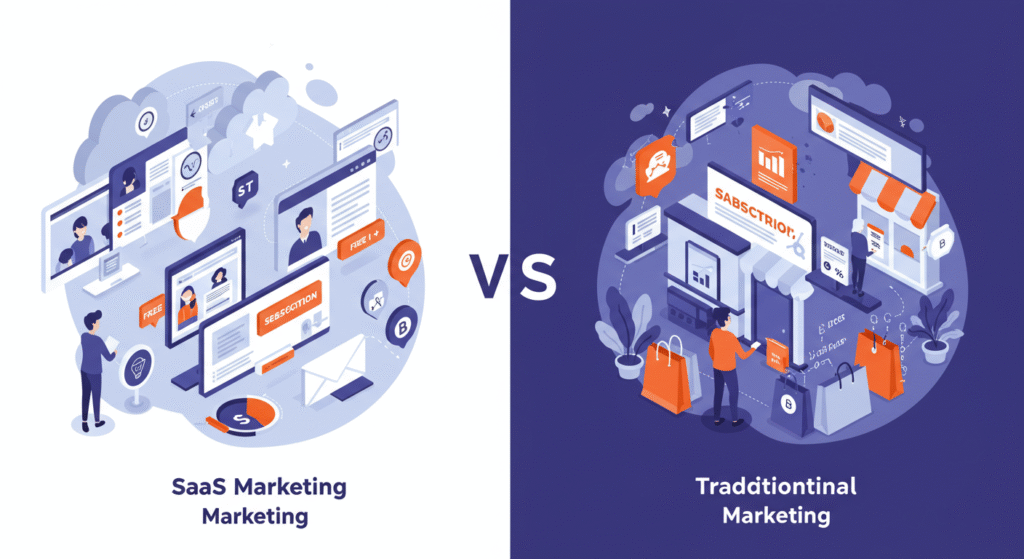
One of the biggest challenges is that SaaS products are not tangible. This is why demos, free trials, and content marketing are extremely important.The SaaS sales cycle is not reliable; sometimes very fast and sometimes quite slow, especially in B2B decision-making where multiple stakeholders are involved.
The focus of SaaS marketing is not only on acquisition, but also on retention and churn reduction, because recurring revenue success depends directly on customer satisfaction and renewals. SaaS products are updated frequently, so marketers must be more adaptable and communicate effectively. SaaS marketing is a unique combination that is both challenging and rewarding.
Core Stages of the SaaS Marketing Funnel
The process of the SaaS marketing funnel works properly on three core stages: which are Acquisition, Conversion, and Retention. Acquisition is the first stage in which there is a goal that attracts new users through 4 steps which are SEO, content marketing, ads, and free trials.
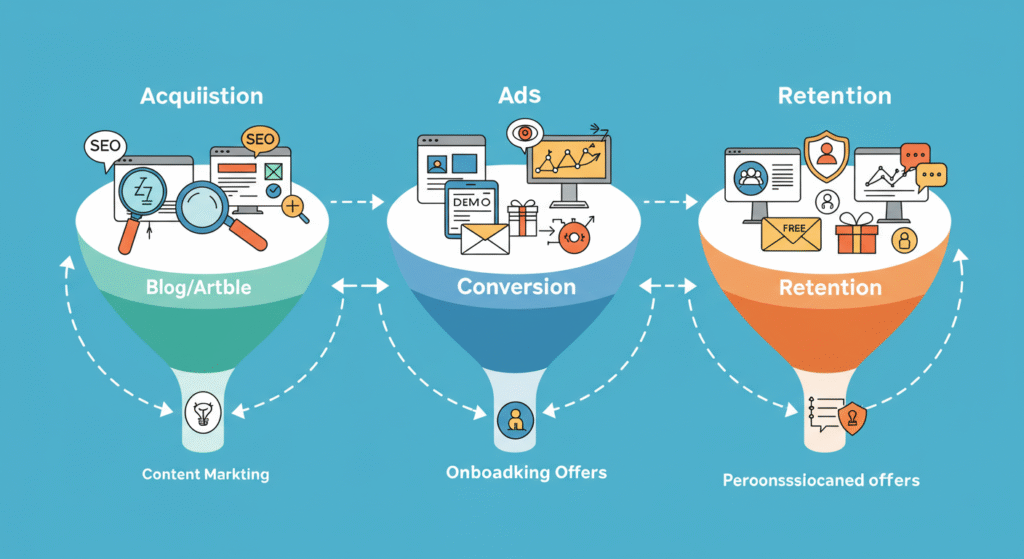
Customers are more likely to renew their paid subscriptions or to churn if they are completely engaged and satisfied, making retention an essential that is, required step. This funnel guarantees and secures that the SaaS (Software as a service) company can create enduring relationships and steady recurring revenue.
Top SaaS Marketing Strategies in 2025
In this new and Artificial Intelligence based era of 2025, the SaaS marketing landscape has become more competitive, therefore it is necessary to adopt smart strategies like working complexity. Content marketing plays the role of a backbone to properly build trust, where handwritten blogs, YouTube lectures, and research-based resources are used to provide customer understanding.
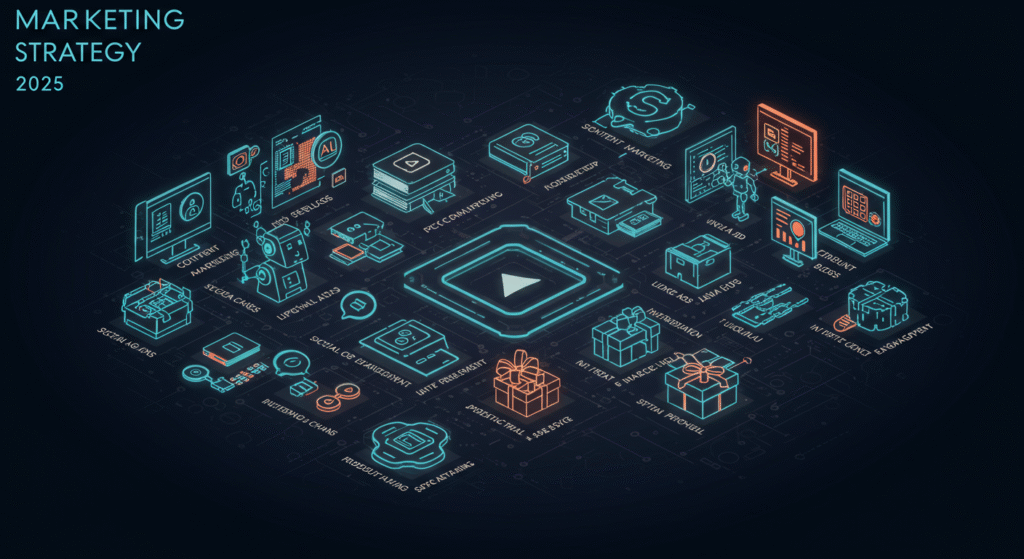
Video marketing and AI-driven SEO strategies increase demand generation and visibility. Paid ads such as PPC and LinkedIn campaigns are effective for targeted outreach, while social media and community building strengthen organic engagement.
SaaS companies use freemium trials and product-led growth so that users first get value and then convert. Influencer marketing and referral programs amplify word of mouth. B2B conversions are accelerated by advanced tactics like Account-Based Marketing (ABM) and comparison websites. Recurring revenue is maintained through customer retention, reviews, and personalized email campaigns. When combined, these strategies build a long-term SaaS growth engine.
Best Practices for SaaS Pricing & Customer Experience
SaaS pricing is a difficult and impacting factor that directly affects growth and revenue. Wrong pricing, meaning the adoption of a wrong pricing model, can slow down the business even if the product is flawless. That is why transparent pricing and tiered pricing models are very effective, because they give flexibility to customers and strongly predict recurring revenue.
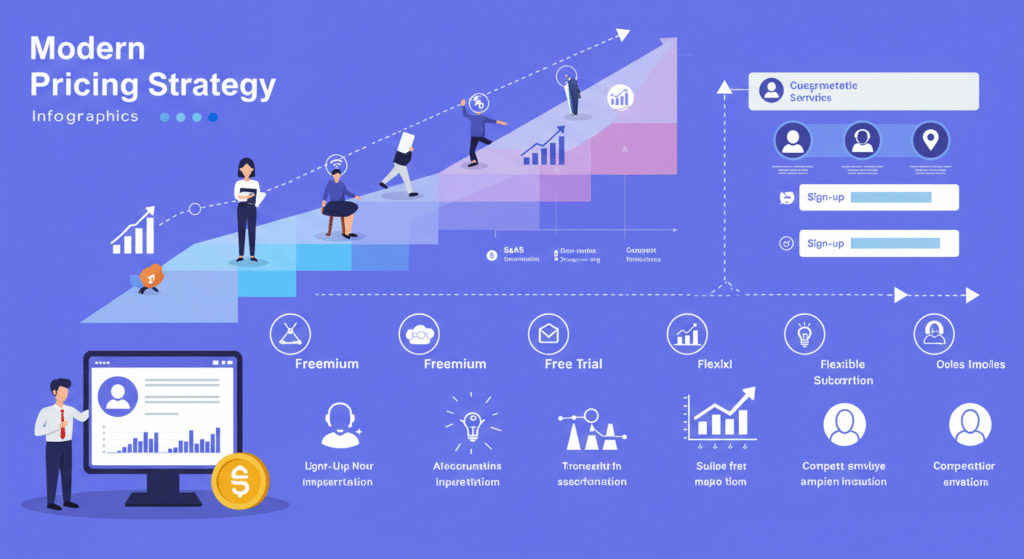
Businesses use buyer personas, competitor data, and business objectives to determine how much to charge. SaaS experiences are improved by easy sign-up flows, free trials, demos, and excellent customer service.
Key SaaS Marketing Metrics to Track
To measure the success rate of SaaS marketing, it is very important to identify and track key metrics. First, Customer Acquisition Cost (CAC) tells the cost of acquiring a new customer. Second, Customer Lifetime Value (CLV) shows long-term revenue potential per user.
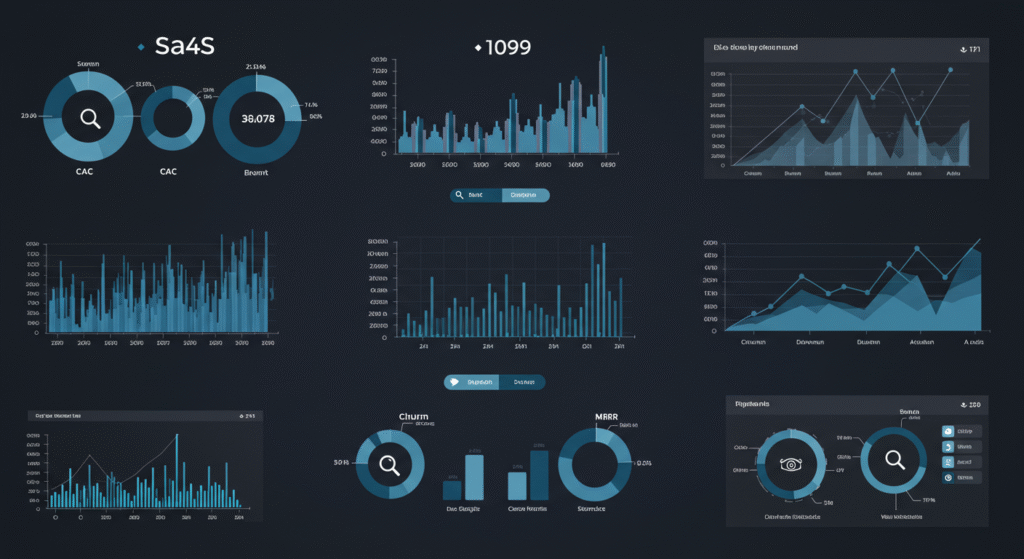
Monthly Recurring Revenue (MRR) indicates predictable income. Churn rate is critical as it shows how many customers cancel the service. Conversion rates reflect how efficiently free trials or leads turn into paying customers, while brand search traffic signals awareness and organic demand.
Conclusion
In SaaS marketing, success completely depends on a smart mix of acquisition, conversion, and retention. Content marketing, SEO, trials, and personalization drive growth, while retention and churn reduction ensure sustainable recurring revenue and long-term relationships.