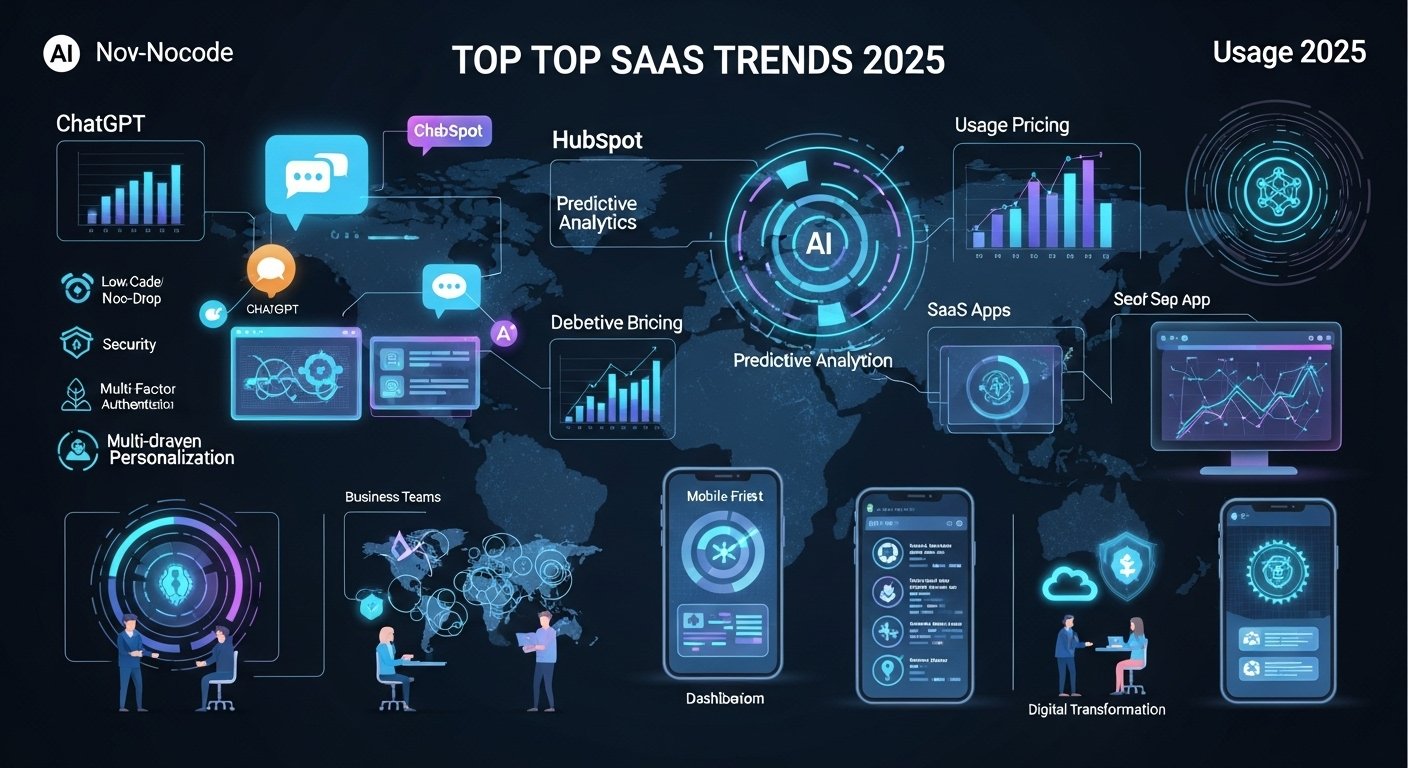
Software-as-a-Service, known as SaaS, is no longer just an IT (Information Technology) related solution, but has established itself as a position in the global digital revolution. Tools like Salesforce, HubSpot, Asana, and Zendesk have shown that SaaS adoption is not just about convenience but also a strong accelerator of business growth. Research reports from Gartner and Statista and Fortune Business Insights prove that in the coming years, the SaaS market will reach a trillion-dollar scale.
In this article, we will deeply discuss the top SaaS trends that held with industry and that will redefine the industry in 2025 and beyond. These trends of present time bring both opportunities and challenges for businesses.
Present Circumstances in the SaaS Sector
By 2025, the value of SaaS is expected to reach around $344 billion (Statista). Gartner states that SaaS expenditure will already cross $232 billion in 2024. SaaS will now power 85% of business applications, a significant jump from 70% in 2023 (BetterCloud).

This growth is mainly driven by three key factors:
Cost-effectiveness and scalability, attracting everyone — from SMBs to Fortune 500 firms.
The boom in cloud adoption post-pandemic.
AI and ML integration, making SaaS working processes smarter and more predictive.
Top SaaS Trends in 2025
1. AI-Powered SaaS Revolution
AI has now become the backbone — mean main bone — of SaaS. Automation, online commerce, personalization, and chatbots like ChatGPT, HubSpot, and others are permeating every industry.
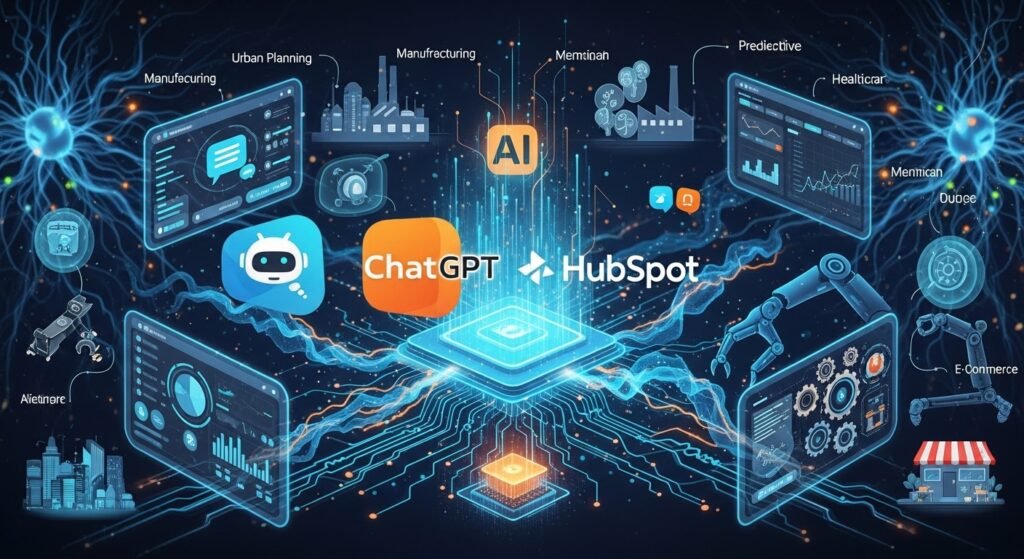
SaaS updated and digital technologies are becoming more intelligent and economical thanks to Generative AI and Predictive Analytics. Better decision-making, workload management, and client personalization are among the advantages for firms.
2. Personalized User Experiences
Zendesk‘s 2022 research-based CX Trends Report states that 90% of customers are willing to pay more for personalized service.

SaaS-adopted companies and industries are now embracing data-driven customization and omnichannel support. Custom dashboards, feedback loops, and AI-based interfaces create a personalized journey that boosts customer retention.
3. Customer Success as Growth Engine
A major SaaS shift is: customer success = business success. Custify CEO Philipp Wolf states that proactive customer success models are now becoming revenue drivers.
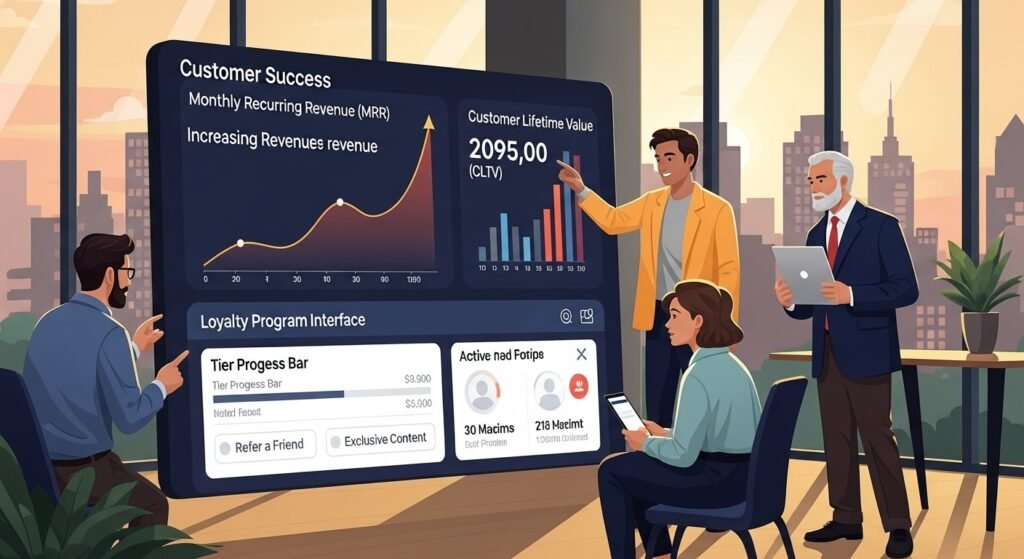
The global customer success platform market will cross $31 billion by 2026. The main focus is on reducing churn and building long-term loyalty programs.
4. Low-Coding / No-Coding Development
Non-technical — mean non-critical — users can now build apps using drag-and-drop SaaS platforms.
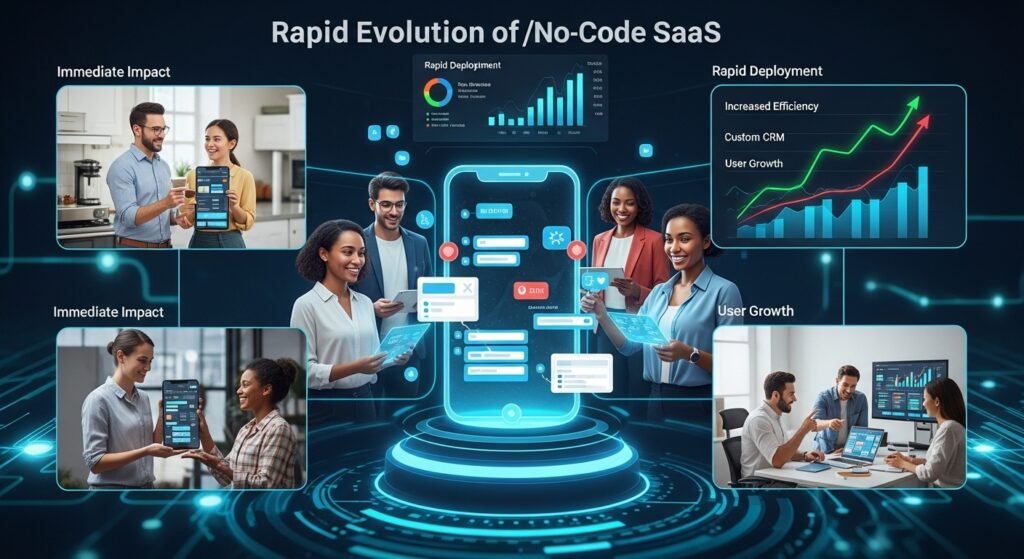
This is a game-changer for SMBs, as they can deploy fast solutions without IT dependency. According to Gartner, low-code solutions will drive SaaS adoption at double the speed over the next 5 years.
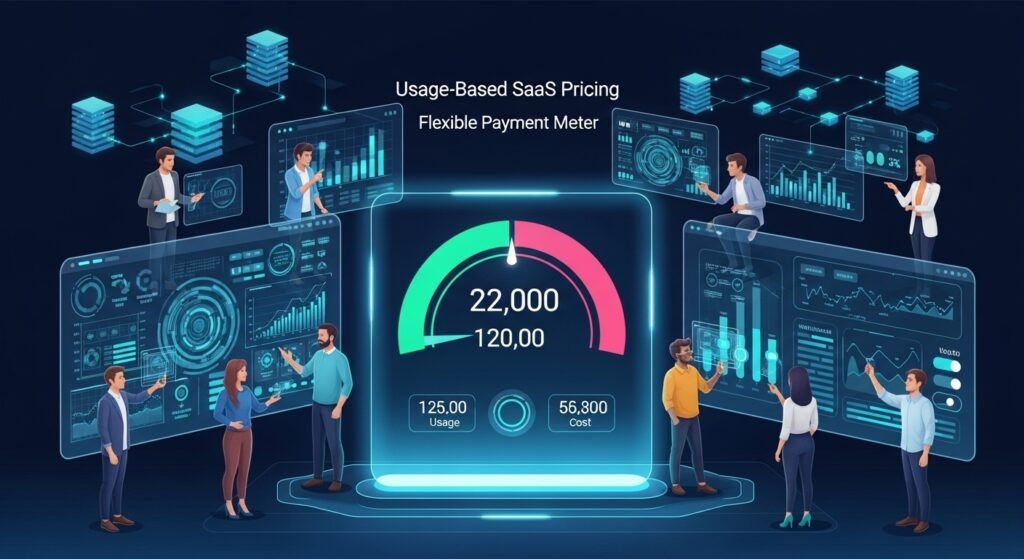
5. Usage-Based Pricing Models
Instead of traditional subscriptions, pay-as-you-use SaaS-related pricing is now in demand. This flexible model allows cost optimization for businesses but makes forecasting and infrastructure planning more complex for SaaS vendors. Still, in 2025, usage-based SaaS adoption will grow rapidly, especially for startups.
The threat of cyberattacks on every industry and company has forced SaaS-related companies to adopt a security-first mindset. Blockchain, multi-factor authentication, and GDPR/CCPA compliance are increasingly essential. Current SaaS trends make it abundantly evident that future adoption depends on trust and openness.
6. Mobile-First SaaS Solutions
Smartphone penetration has totally changed mind and pushed SaaS toward adopting mobile-first architecture. Companies are now creating apps that provide anywhere-anytime access.
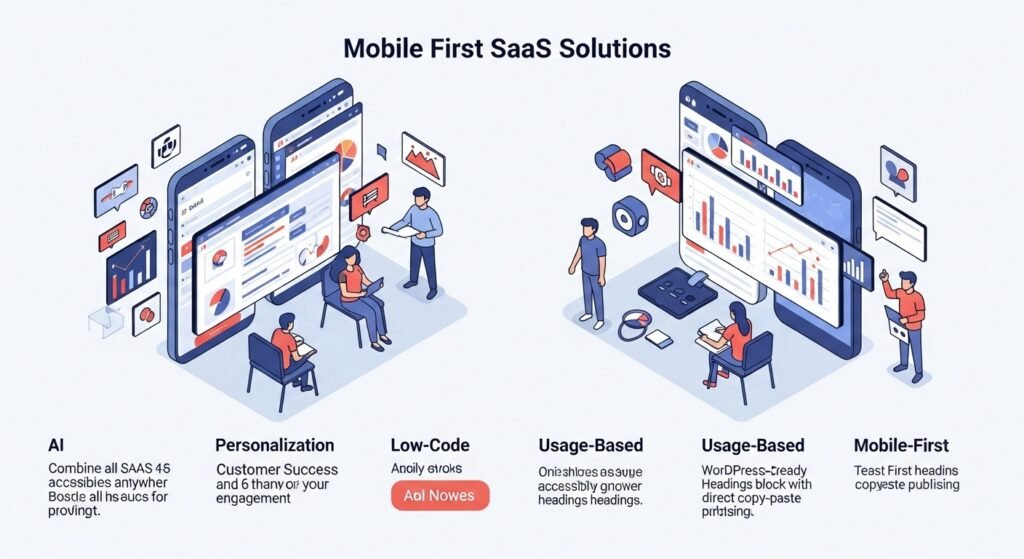
In the future AI-based era, SaaS apps will be designed specifically for mobile experiences, boosting both accessibility and engagement.
Preparing for the Upcoming Future
SaaS trends at the present time clearly show that the future belongs to AI-driven, personalized, secure, and mobile-first solutions. Companies that focus on customer success, data security, and vertical specialization will be the ones leading the market. For SaaS founders and customer success teams, the recommendation is to adopt both innovation and integration.
Conclusion
SaaS is no longer just a software model but a business transformation enabler. Accurate and timely adoption process of these SaaS (Software as a service) developments will give organisations a competitive advantage in their respective industries. The future of these tasks is clear and white: SaaS will be the foundation of digital transformation in 2025 and beyond, whether it is through AI or micro-SaaS.