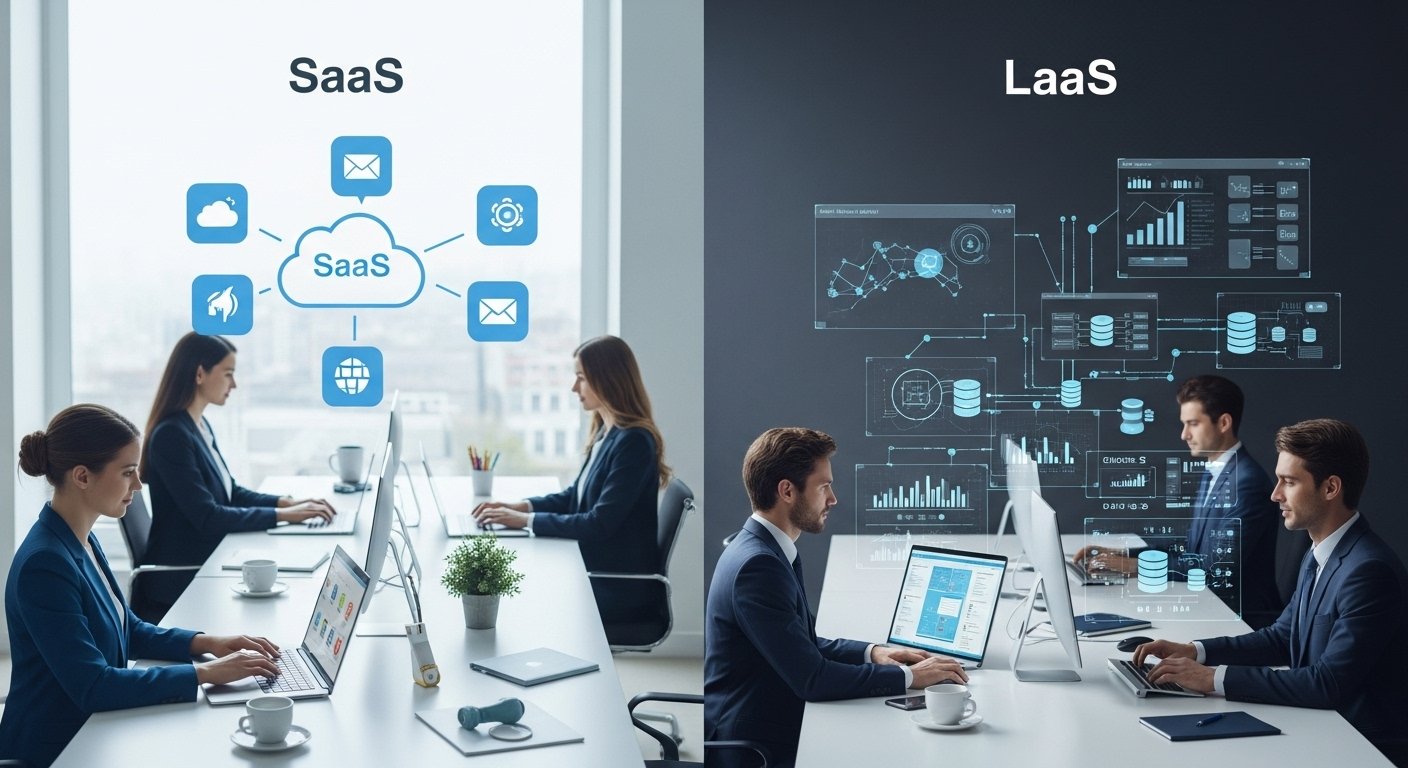
A method has been introduced to transform digital business, called Cloud Computing. Traditional on-premises IT solutions are still available in the market, but organizations are adopting SaaS and LaaS models, which makes things easier and leads to growth. While SaaS and LaaS offer scalable and cost-effective choices, their reach is more limited.
Software as a Service, or SaaS, is ready-to-use software. LaaS, or Lighting as a Service, is a cloud-based paradigm that allows third-party providers to manage specific functions. As an example, let’s look in the context of Lending as a Service, Logistics as a Service, Licensing as a Service, and Loyalty as a Service.
What is SaaS? Key Features and Benefits
SaaS refers to the digital sale of web-based software that users can obtain through an online portal. Software as a Service, or SaaS, is a solution or a method to issues that sectors and enterprises encounter.

The main features of SaaS include subscription-based pricing, automatic updates, remote accessibility, and scalability. This strategy enhances collaboration by allowing teams and individuals to work safely from any device.
Quick deployment, less IT effort, and cost-effectiveness are among the advantages. SaaS is consequently the greatest choice for companies, from startups to major organizations, wishing to grow rapidly.
What is LaaS? Key Features and Benefits
LaaS, meaning Lighting as a Service, is a cloud-based model whose working process is that a third-party provider manages a specific function. For understanding or depending on the context, LaaS can be considered as Lending as a Service, Logistics as a Service, Licensing as a Service, or Loyalty as a Service.

Benefits of LaaS: lower infrastructure cost and expenses, streamlined processes, and quicker time-to-market. Startups and businesses or companies adopt LaaS for fast innovation and efficient development.
SaaS vs LaaS: Core Differences Explained
SaaS (Software as a Service) and LaaS (Lighting as a Service) are both very powerful cloud computing service models in the AI-driven era, but their purpose, usage, and target users are different.
SaaS: Digitally distributed web-based software that allows users to access it through an online portal. Microsoft 365 and Google Workspace are well-known examples. Perfect for end customers who want ready-to-use apps without having to worry about infrastructure management.
The terms “LaaS” and “Lighting as a Service” are most frequently used to describe cloud-based models that allow third-party providers to administer particular functions. Depending on the context, it can also mean Loyalty as a Service, Lending as a Service, Logistics as a Service, and Licensing as a Service.
Real-World Examples of SaaS and LaaS
Cloud usage is growing quickly because SaaS and LaaS both have strong real-world use cases.
Examples of SaaS or Software as a Service: Netflix (entertainment), Dropbox (file sharing), Salesforce (CRM), and Slack (team collaboration). The subscription-based model provides instant access, automatic updates, and smooth scalability.
Examples of LaaS: Secure LaaS platforms from Microsoft Azure and AWS provide an environment where applications are built, tested, and deployed sequentially. Lighting as a Service (LaaS) gives developers a complete environment with all facilities, including middleware and databases readily available. Innovation, cost-effectiveness, and agility are ensured.
SaaS or LaaS: Making the Right Decision
SaaS is chosen when quick deployment of pre-made, usable apps without complicated IT setup is needed. Perfect for collaborative tools, CRM, and email.
LaaS is chosen when the team concentrates on developing, testing, and implementing custom apps. Developers may work more productively in a comprehensive environment, and scalability and integration are simple.