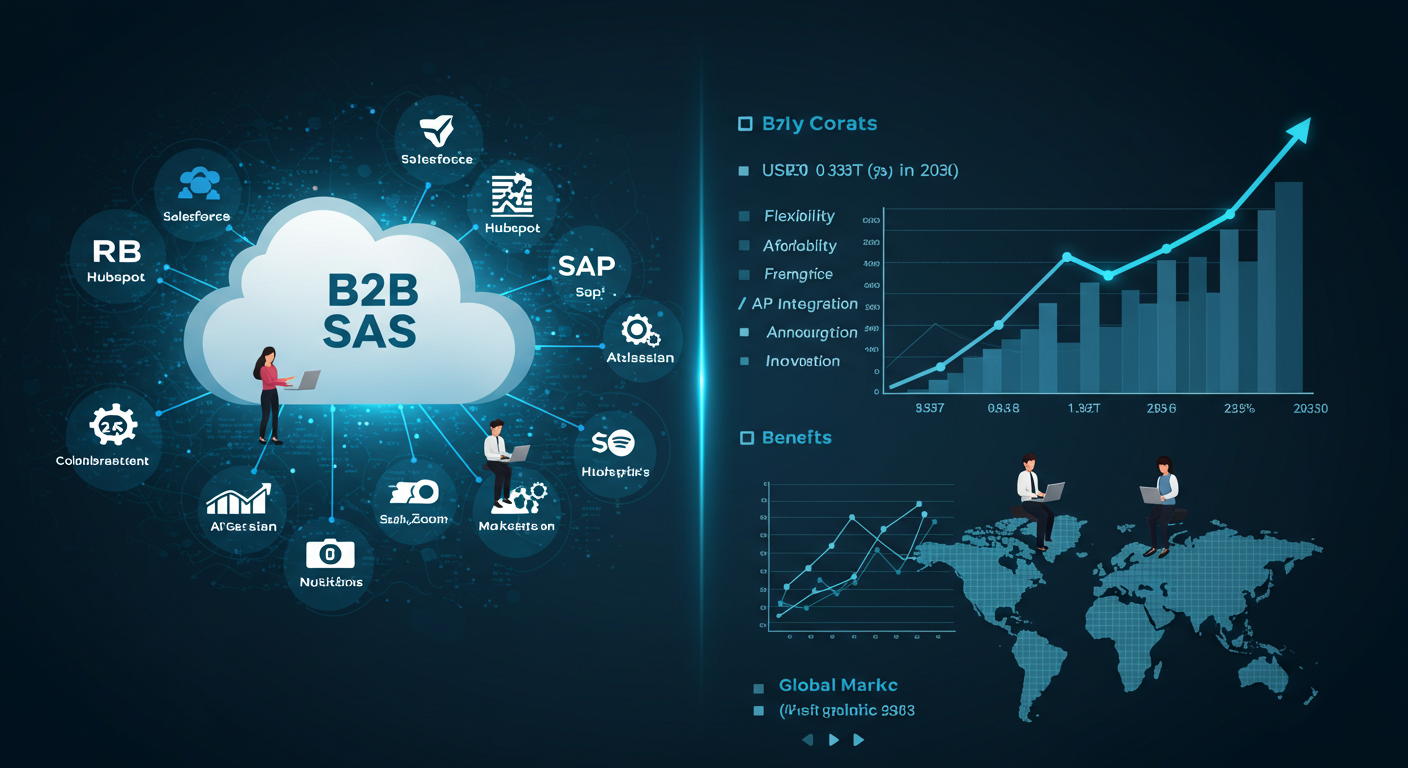
In today’s new updated and digital world, SaaS (Software-as-a-Service) has completely changed the business landscape. Especially B2B SaaS, where companies or industries provide cloud-based software facilities to other companies, making the model one of the fastest-growing processes. These software solutions — from accounting, CRM, team collaboration, and productivity tools to other essentials — boost the efficiency and growth of businesses everywhere, creating ease in the process. Due to this very process, companies play a basic role in making their operations highly scalable, cost-effective, and flexible.
In the below-written article, you will learn the real meaning of B2B SaaS along with all its helpful and useful information.
What is B2B SaaS?
B2B SaaS, meaning Business-to-Business Software-as-a-Service, is a cloud-based software delivery model in which companies use software on a subscription basis to streamline their business operations and increase growth.
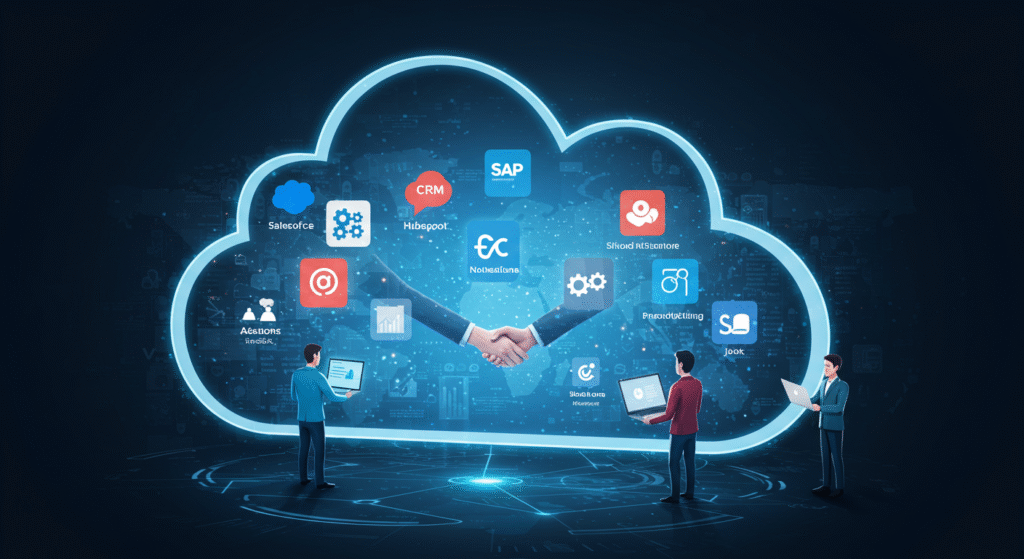
In simple words, B2B means one business provides services to another business, while SaaS means software directly accessed through the internet without installation or physical touch.
By combining these two concepts, a new concept is formed which is called B2B SaaS, where businesses use solutions like CRM (Salesforce, HubSpot), ERP (SAP, Oracle NetSuite), project management (Asana, Jira), and productivity tools (Slack, Zoom, Google Workspace) to boost their efficiency and growth.
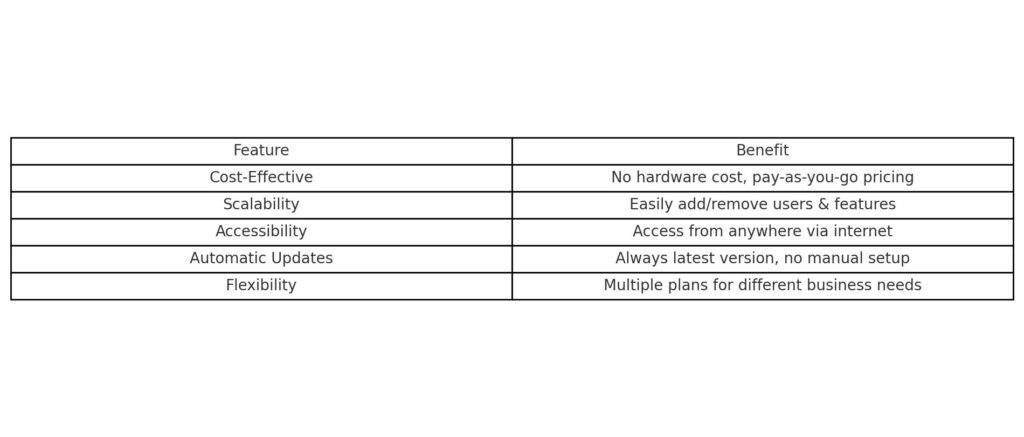
Its biggest advantage is that this model is cost-effective, scalable, and accessible, with automatic updates and flexible plans. For this reason, in today’s digital economy, B2B SaaS is considered the backbone of modern businesses.
B2B SaaS vs. B2C SaaS
The working process of both B2B SaaS and B2C SaaS is based on cloud-based software delivery models, but their focus and approach are quite different.

B2B SaaS companies and industries usually have longer sales cycles, sophisticated tools, and higher-value transactions. Here, decision-making involves multiple stakeholders and is centered on ROI, scalability, problem-solving, and competitiveness.
On the other hand, due to shorter sales cycles, rapid acceptance, and user-friendliness, B2C SaaS works well for individual users and has huge popularity.
These products are typically standardized and user-friendly, and often emotionally appealing, though also focused on convenience.
For example, Netflix is a B2C SaaS platform offering entertainment services directly to customers, while Salesforce is a B2B SaaS solution offering CRM services to businesses.
Key Characteristics of B2B SaaS
The biggest benefit or working trick of B2B (Business-to-Business) SaaS is that its model is subscription-based, where companies pay monthly or annual fees to easily access the software, enabling predictable budgeting.
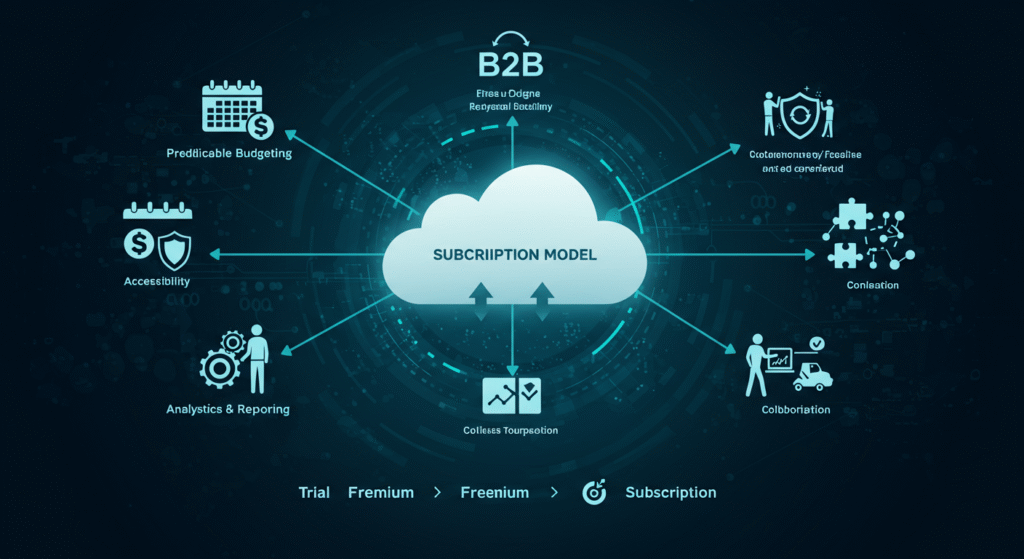
This software is cloud-based, meaning it is processed on remote servers hosted on the internet, which makes remote work and accessibility possible without extra hardware.
Providers deliver automatic updates and security patches to ensure smooth and hassle-free usage.
Along with this, B2B SaaS solutions are efficient, scalable, flexible, and can integrate with other business systems via APIs. They also provide customization options.
Features like reporting and analytics, and collaboration tools boost efficiency, while trial or freemium options help businesses adopt software before upgrading to a paid subscription.
Growth of the B2B SaaS Industry
The B2B SaaS industry is witnessing rapid growth, whose foundation was laid in the early 2000s by Salesforce and the subscription-based software boom.
With the rise of cloud adoption and the subscription economy, this model accelerated, as businesses now prefer scalable and flexible SaaS solutions instead of traditional software.
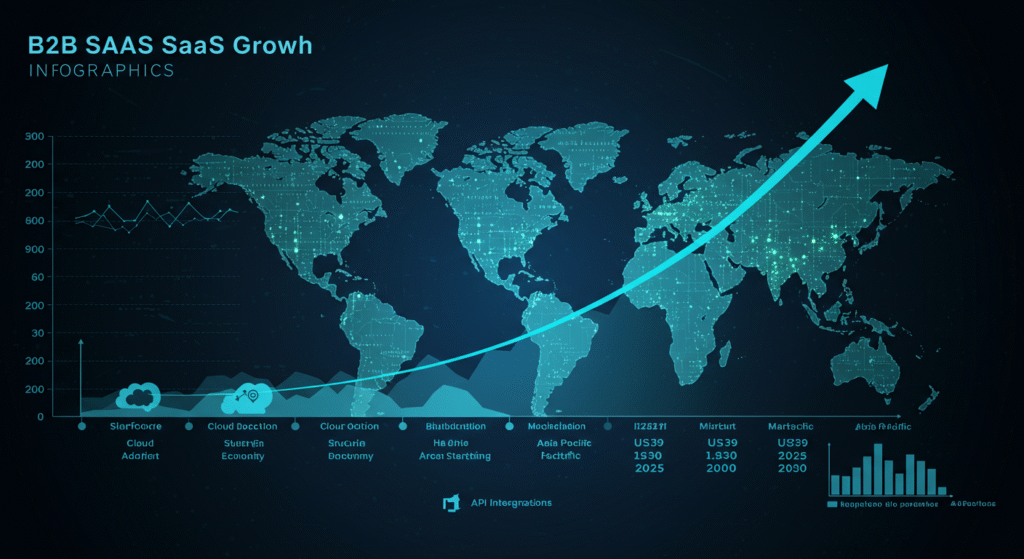
According to market reports, the size of B2B SaaS will be USD 0.39 trillion in 2025, forecasted to reach USD 1.30 trillion by 2030 with a 26.91% CAGR.
Currently, North America is the largest marketplace, but the Asia Pacific region is considered the fastest growing.

The factors fueling this growth are API-led integrations, AI adoption, remote work, and the demand for vertical SaaS solutions.
For this reason, B2B SaaS is now considered the backbone of today’s digital economy.
B2B SaaS Examples
B2B SaaS examples highlight cloud-based tools that businesses use to streamline operations and complete essential processes.
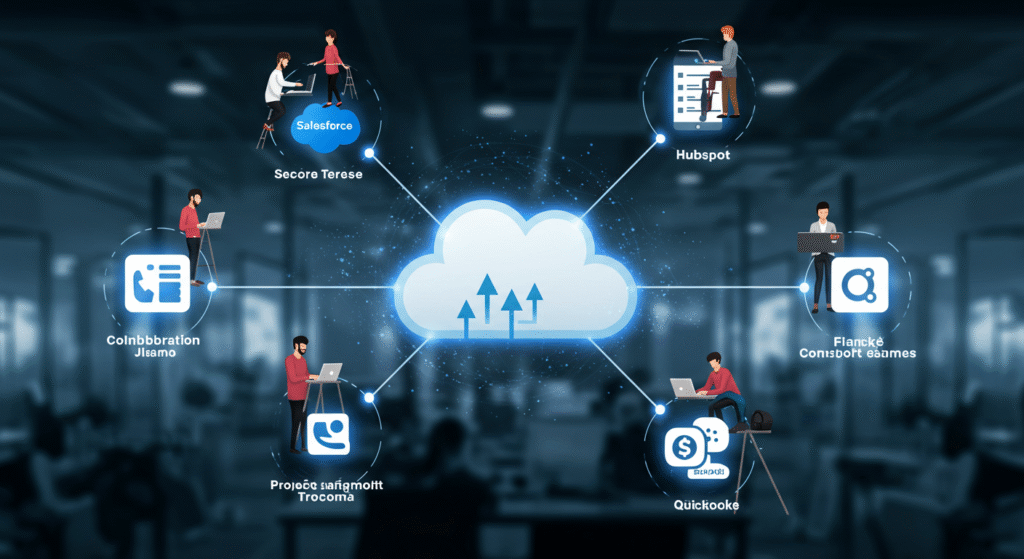
Popular CRM solutions like Salesforce and HubSpot provide companies with customer management facilities. For project management, Asana and Jira are widely used. In terms of collaboration, Slack, Zoom, and Microsoft Teams are the top picks.
For finance and accounting, QuickBooks and Xero are preferred. All of these B2B SaaS solutions run on a subscription-based model, providing scalable, accessible, and flexible services for modern businesses.
Top B2B SaaS Companies
In today’s digital era, some top B2B SaaS businesses are playing a fundamental role in the business world. CRM and ERP solutions are mainly provided by companies like Salesforce, SAP, Microsoft (Office 365, Dynamics 365), and Oracle.
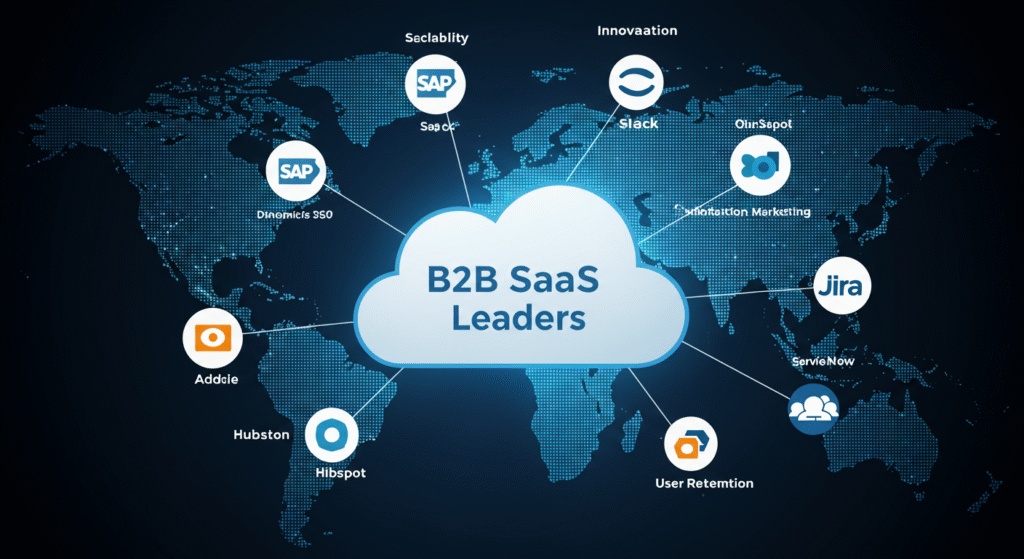
Zoom and Slack, along with HubSpot, Adobe marketing automation, and creative tools, make remote collaboration easy. Atlassian (Jira, Confluence) and ServiceNow simplify workflow management.
These companies, on the basis of scalability, innovation, and user retention, are leading the global B2B SaaS market.
Benefits of B2B SaaS
Flexibility, affordability, and smooth scaling for companies of all sizes are the most significant advantages of B2B SaaS. By using a predictable subscription model, businesses can reduce upfront hardware and licensing expenses.
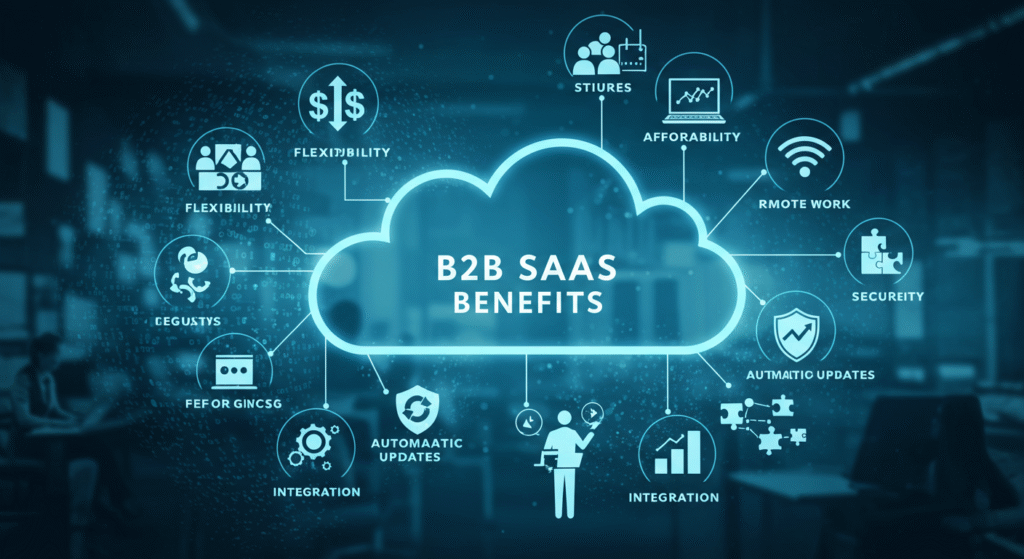
Cloud-based deployment ensures remote accessibility, allowing teams to collaborate more effectively. By managing processes like backups, security compliance, and automatic updates, SaaS providers reduce IT strain. Strong analytics and integration tools further support better decision-making and operational efficiency. Overall, B2B SaaS empowers companies to stay innovative, efficient, and scalable in the long term.
Conclusion
B2B SaaS is the backbone of modern business; it allows organisations to cut costs and improve flexibility and scalability and reliability. When organisations use a cloud-based model, their operations become more efficient, which accelerates their growth. Adaptability is the essential to long-term success and adaption, as demonstrated by the significant challenges posed by future AI, vertical SaaS, and security-driven models.