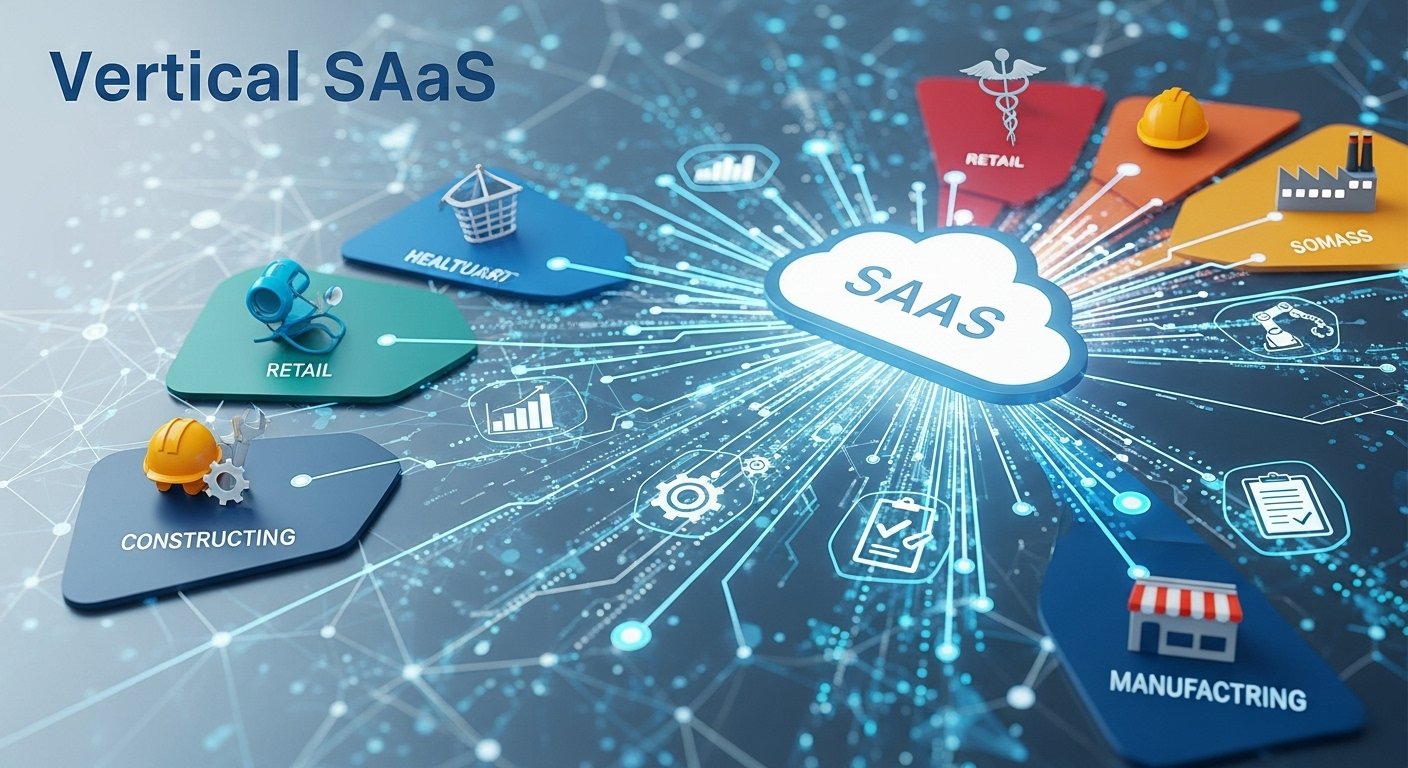
Vertical SaaS, which is a type of Software as a Service (SaaS), whose working process is only for a specific industry, that’s why it is especially designed according to the requirements. In such specific industries, for example, we can see healthcare, construction, retail, or the legal sector. On the contrary, Vertical SaaS targets a specific industry’s specialized workflows, regulatory requirements, and everyday issues, whereas Horizontal SaaS targets an industry’s general tools (such as CRM or HR apps).
In today’s era of digital transformation, Vertical SaaS companies like to offer industry-fit solutions, regulatory compliance, improved efficiency, and quick return on investment.
What is Vertical SaaS?
Vertical SaaS, which is a type of Software as a Service (SaaS), whose working process is only for a specific industry, that’s why it is especially designed according to the requirements. In such specific industries, for example, we can see healthcare, construction, retail, or the legal sector.
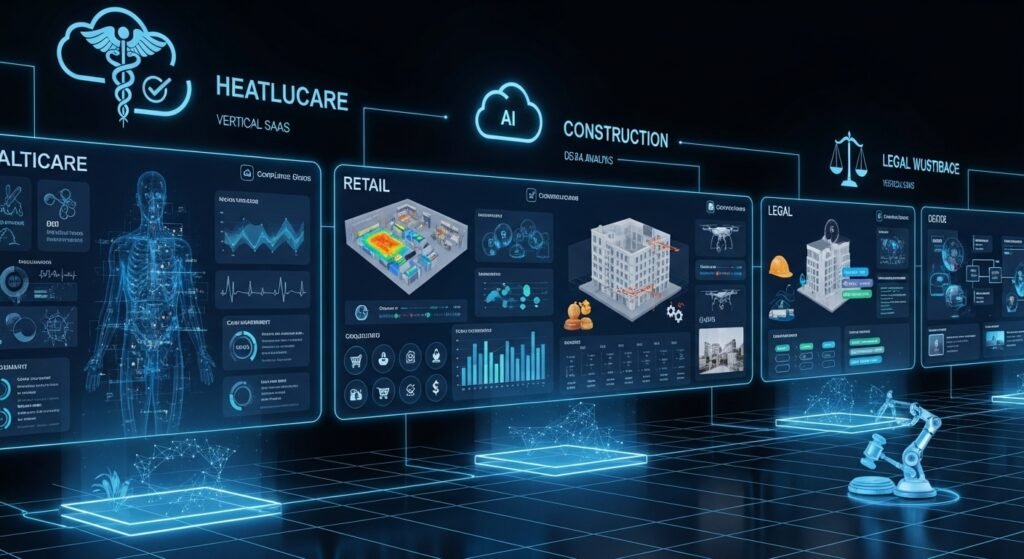
On the contrary, Vertical SaaS targets a specific industry’s specialized workflows, regulatory requirements, and everyday issues, whereas Horizontal SaaS targets an industry’s general tools (such as CRM or HR apps).
In today’s era of digital transformation, Vertical SaaS companies like to offer industry-fit solutions, regulatory compliance, improved efficiency, and quick return on investment.
Vertical SaaS, which is a type of Software as a Service (SaaS), has a working process meant only for a specific industry; that’s why it is especially designed according to the requirements. In such specific industries, this software targets and perfectly addresses the unique workflows, compliance rules, and daily challenges of those industries.
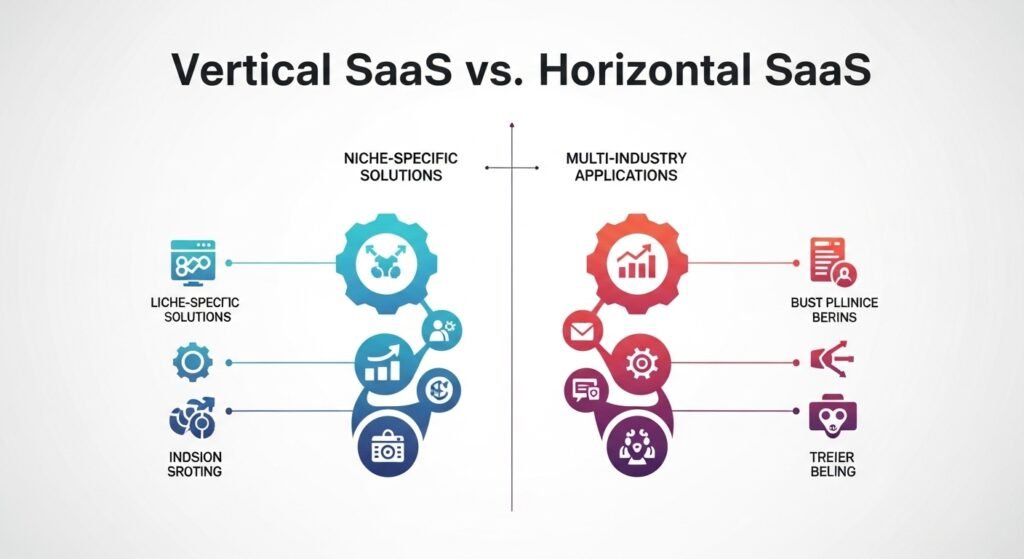
Vertical SaaS is a more focused approach with extensive customization, pre-built compliance solutions, and targeted integrations than Horizontal SaaS, which offers general-purpose tools (such as CRM, HR, or project management software) for a variety of industries.
Key Industries Using Vertical SaaS
Healthcare:
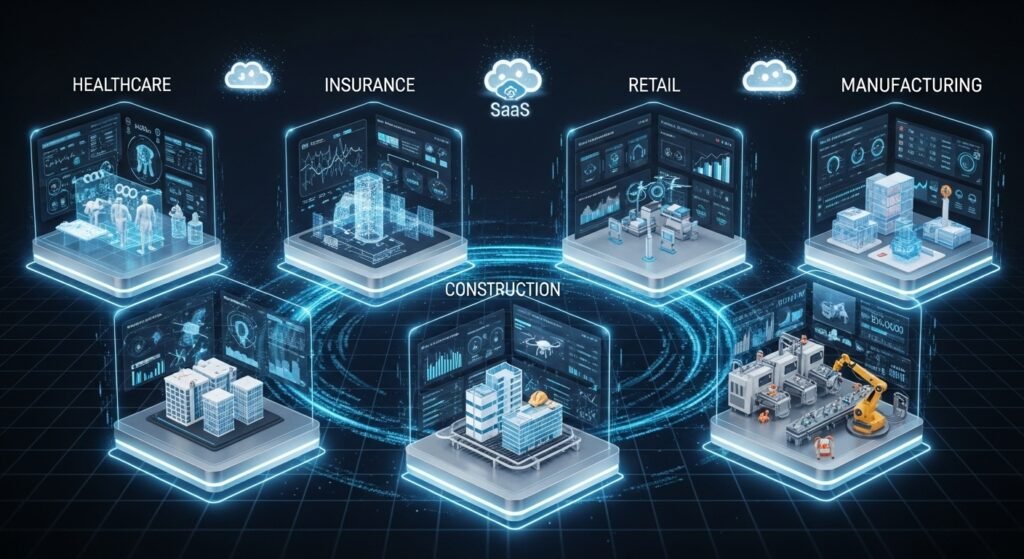
In the healthcare industry, Vertical SaaS helps hospitals and clinics manage patient data, appointments, billing, and HIPAA compliance. Platforms like ChiroSpring integrate secure payment systems, automate records, and support digital forms — which greatly reduces administrative workload.
Insurance:
In the insurance sector, Vertical SaaS automates policy processing, claims management, and compliance reporting. This makes claim settlements faster and improves data security — which increases both customer trust and operational speed.
Retail:
In simple words, we understand retail — for example, retailers who use SaaS solutions such as Shopify, Daraz, and Alibaba can unify eCommerce, specific product sales, and in-store operations on a single platform. These platforms handle online orders and multiple payment methods, giving customers a seamless shopping experience and efficiency.
Construction:
For the construction process, SaaS tools like HindSite Software handle procedures such as scheduling, bidding, field operations, and compliance management. Through integrated payments, contractors and managers can receive instant payments from clients, which increases project efficiency.
Manufacturing:
In the manufacturing industry, production lines are streamlined, inventory is tracked, and supplier relationships are managed via Vertical SaaS. Real-time analytics and reports can save downtime and enhance quality control.
Vertical SaaS offers specialised and regulatory-compliant solutions that improve important tasks, processes, productivity, and profitability across all of these industries.
Advantages of Vertical SaaS
Improved Efficiency:
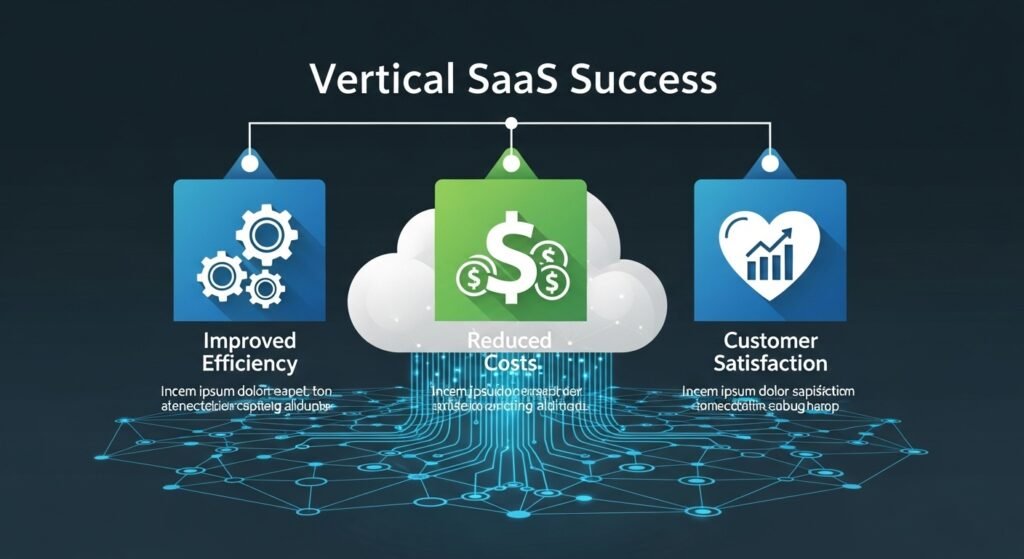
When a single product provides a complete solution for an entire industry’s operations, the processes become smoother. Vertical SaaS streamlines workflows, giving teams more time to execute other important tasks and enhancing productivity across departments. According to McKinsey Digital, process automation through industry-specific software can boost efficiency by up to 30%.
Reduced Costs:
A unified system with all the necessary tools in one location is provided by Vertical SaaS platforms. By doing this, companies can avoid spending additional money on customising already-existing technologies and save money on maintaining various software systems. This centralized approach helps organizations reduce operational costs and allocate resources to innovation.
Higher Customer Attention and Satisfaction:
A common issue users face is the lack of customizable solutions. Vertical SaaS solutions solve this problem by providing industry-specific tools that are ready to use for business operations, thereby increasing both customer satisfaction and loyalty. The personalized experience and seamless integrations build long-term trust and engagement.
Challenges in Vertical SaaS
Smaller Size of Market:
Vertical SaaS targets a niche-based audience of specific industry, meaning it focuses on a specific group of users. That is why its market size is smaller compared to horizontally scaled SaaS solutions. Limited scalability makes it challenging to achieve rapid expansion beyond its defined sector.
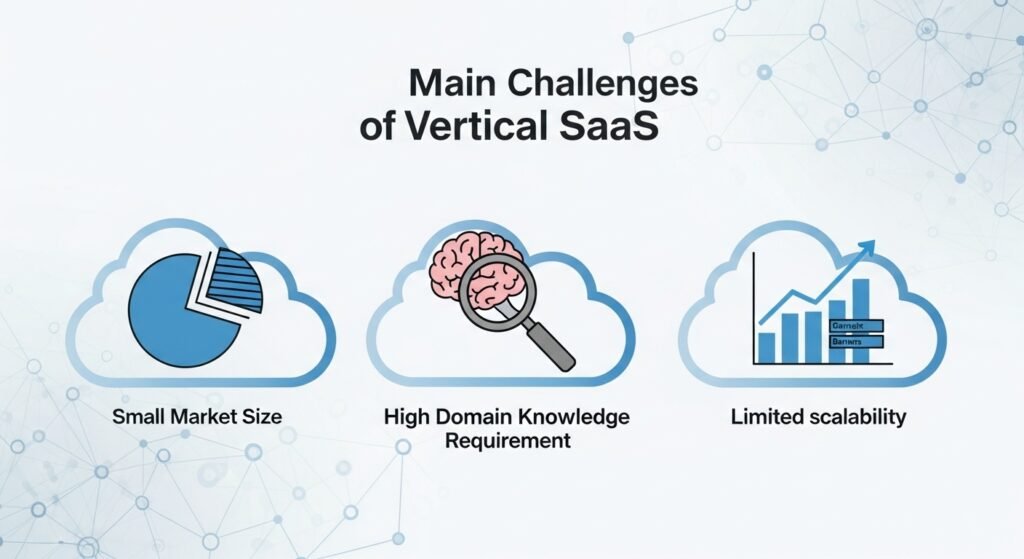
High Domain-Related Knowledge Requirements:
To develop Vertical SaaS, it is very important first to understand specific industry knowledge and regulatory rules, which makes the development process more complex. The need for domain expertise and compliance (such as HIPAA, GDPR, or PCI DSS) increases the difficulty of creating these highly specialized platforms.
Scalability and Customization Limits:
Since Vertical SaaS is industry-specific, meaning it works within a particular niche, its scalability is limited, and customization is not equally effective for every sector. Expanding features across multiple industries often requires rebuilding modules from scratch, making horizontal growth more resource-intensive.
Vertical vs Horizontal SaaS
Vertical SaaS is also developed for specific industries, meaning it is designed for those sectors that have particular needs — targeting a specific audience. According to recent research by McKinsey, the next phase or next step of Vertical SaaS will be driven and continued by AI and automation.
AI-powered platforms will provide intelligent automation, customised suggestions, and industry-specific predictive analytics.
An additional trend is the rise of industry cloud ecosystems, which integrate SaaS, data platforms, and APIs to create a networked system — enabling seamless data flow, improved scalability, and enhanced performance for niche sectors.
Conclusion
Vertical SaaS is playing the role of a core driver for digital transformation. Efficiency, compliance, and customer satisfaction are all achieved through its industry-focused design in enterprises. Corporate IT will continue to be impacted by vertical SaaS as cloud and AI ecosystems expand. By enabling better, quicker, and more lucrative business processes, Vertical SaaS is influencing the next wave of cloud innovation with its expertise and intelligence-driven methodology.