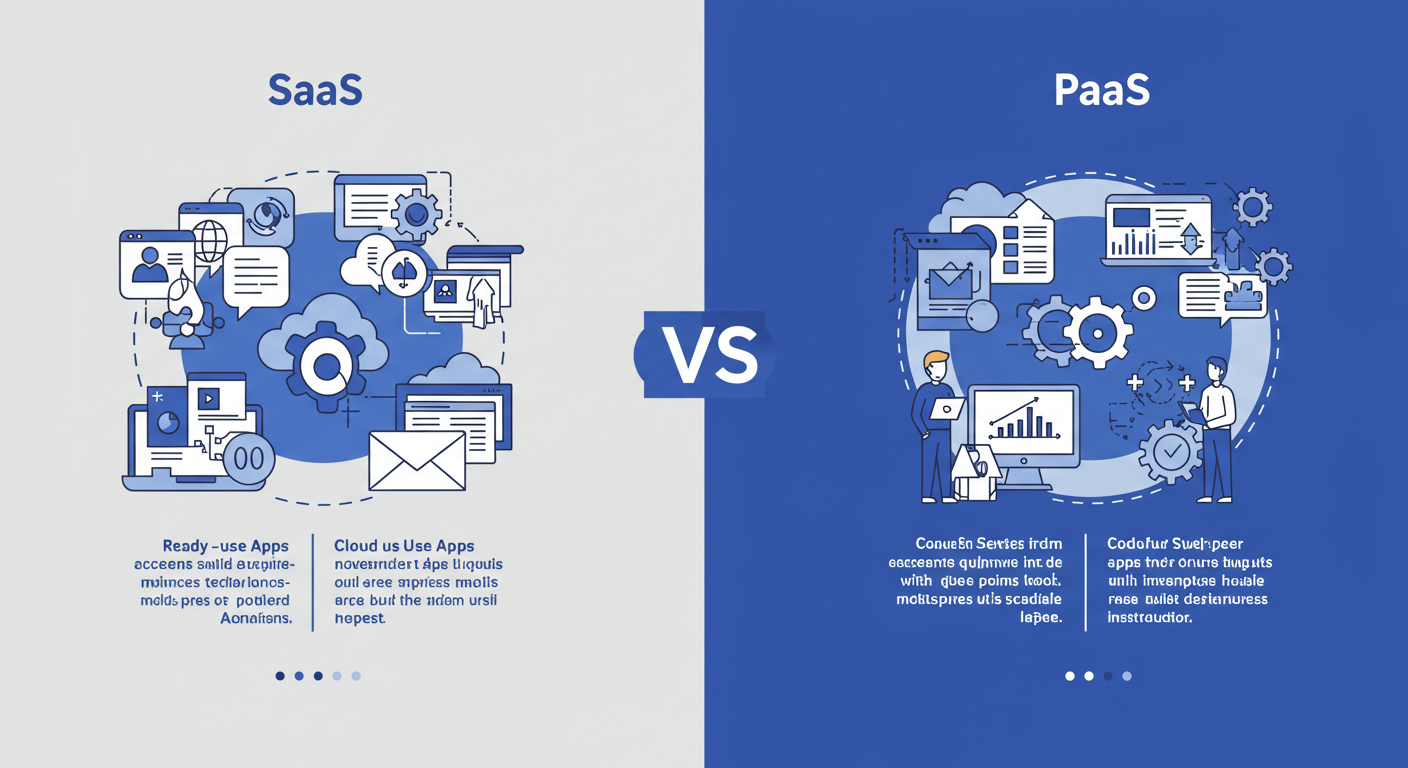
To transform a business into digital form, a method has been introduced which is called Cloud Computing. The very old tradition of traditional on-premises IT solutions has now ended in markets or industries, and organizations are adopting models like SaaS or PaaS and IaaS to create easiness in working and to increase growth. SaaS or PaaS both provide scalable and cost-efficient options, but their scope is very different.
SaaS, meaning Software as a Service, gives you ready-to-use or pre-built software, while PaaS provides a development platform where apps can be built and deployed. Along with this, IaaS offers infrastructure services and CaaS provides container-based solutions. The role of each model depends on business needs and IT management responsibility.
What is SaaS? Key Features and Benefits
SaaS sales refers to the process in which web-based software is digitally sold, which customers or visitors access and use through an online portal. SaaS stands for Software as a Service, which businesses and industries use to solve their pain points or problems.

Among SaaS or PaaS models, SaaS’s modern key features include subscription-based pricing, automatic updates, scalability, and remote accessibility.
This model enhances collaboration and allows teams to work securely from any device. The benefits include cost efficiency, reduced IT workload, and fast deployment. For this reason, SaaS is an ideal choice for startups to enterprises for fast growth.
What is PaaS? Key Features and Benefits
Platform as a Service (PaaS) is a model that provides developers or engineers with a complete environment to build, test, and deploy applications, which we also call a cloud computing model. Its working process is that the underlying infrastructure and system management, meaning complete responsibility, is handled by the provider, which allows developers to only focus on coding and innovation and to ensure that the work can be completed fastly and smoothly.

When comparing SaaS vs PaaS, PaaS has more pre-built functionality, such as middleware, database administration, integration possibilities, and development tools. Support is provided by quick development cycles, scalability, individuals, and teamwork.
The benefits include lower infrastructure costs and expenses, streamlined processes, and a quicker time-to-market. Businesses, companies, and startups can also take benefit from this, as it is a game changer and a winner in role-playing.
SaaS vs PaaS: Core Differences Explained
SaaS (Software as a Service) and PaaS (Platform as a Service) are both powerful cloud computing service models in today’s AI-driven era, but they differ in purpose, usage, and target users.
SaaS refers to web-based software that is digitally delivered, which customers or visitors can access via an online portal. Popular examples include Google Workspace and Microsoft 365. SaaS is ideal for end-users who need ready-to-use applications without managing infrastructure.
PaaS, on the other hand, provides developers with a complete environment to build, test, and deploy applications. Examples include Heroku and Microsoft Azure App Service. PaaS is best for developers looking to innovate and scale applications efficiently.
When to Choose SaaS for Your Organization
If your organization wants to work fast and needs ready-to-use applications without a heavy IT setup, then among SaaS or PaaS, SaaS, meaning Software as a Service, is the best choice. SaaS is perfect for businesses, companies, or industries that want cost-effective and fast deployment solutions. This concept lessens the IT workload by using subscription-based software, which is paid for and has automated updates. SaaS is also used by startups, SMEs, and even major corporations because to its scalability and remote accessibility. SaaS becomes the best option for the company when instantaneous CRM, email, project management, or communication solutions are required.
When to Choose PaaS for Your Organization
If your organization is more focused on development and wants to build custom applications on a large scale, then among SaaS or PaaS options, PaaS, meaning Platform as a Service, is the ideal solution. This model is best for businesses, companies, or industries that want to provide their developers with a ready made environment without managing servers or infrastructure. PaaS uses pre built tools, middleware, and databases that are readily available to speed up the development cycle. Startups and businesses adopt PaaS because of its fast innovation, scalability, and integration capabilities. When the focus is on coding, testing, and deployment, PaaS becomes an efficient choice for organizations.
Real-World Examples of SaaS and PaaS
In today’s digital and fast-growing era, cloud adoption is growing very rapidly, and SaaS and PaaS both show powerful real-world use cases. SaaS examples include Slack for team collaboration or working efficiency, Salesforce for CRM, Dropbox for file sharing, and Netflix for entertainment, all of which are very popular globally. Their subscription-based, meaning paid, model provides users or individuals with instant, meaning at-a-time, access, automatic updates, and seamless scalability.However, because they offer highly secure PaaS platforms where applications must be developed, tested, and deployed in a sequential manner, Microsoft Azure and AWS have selectively hired developers. These models are crucial for contemporary firms because they facilitate innovation, cost effectiveness, and agility.
SaaS or PaaS: Making the Right Decision
In difficult situations, choosing the right cloud model is critical for every organization, and here the role of SaaS or PaaS becomes clear. If you need ready-made, meaning pre-built-in applications that can be deployed instantly without IT (Information Technology) complexity, then SaaS, meaning Software as a Service, will play the role of a perfect choice. It is perfect for collaborative tools which has collaboration facilities, email, and CRM. However, because it provides developers with a complete environment for building, testing, and deploying, PaaS (Platform as a Service) is perfect if your team or people focus on customising, developing, and comprehending applications.